Markets are facing an environment of high uncertainty and rising risks, which naturally reinforce the demand for gold as an investment haven. The threats to portfolios are everywhere and are unlikely to recede in the near future.
The dominant financial orthodoxy in the United States continues to revolve around the dollar, comparing it exclusively to other fiat currencies – that is, currencies without a counterpart in any real asset.
On this basis, the dollar sometimes appears to strengthen, sometimes to weaken. However, the most meaningful approach is to evaluate gold against all fiat currencies as a whole. Because the truth is that all currencies lose value, just at different rates.

The Illusion of Dollar “Strength”
Twenty years ago, the Dollar Index (DXY) was trading at 80, while today it is trading around 99. From this narrow perspective, the dollar appears to have strengthened against other currencies. But this is a dangerous illusion.
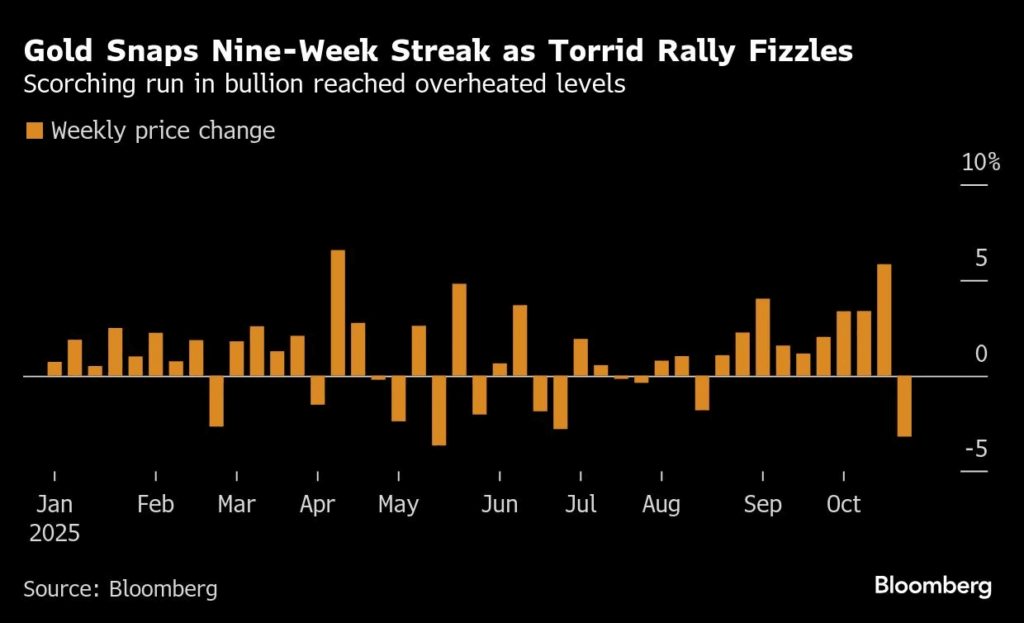
Over the same period, the purchasing power of the dollar has declined dramatically. In 2005, gold was trading near $500 an ounce, while today it is over $4,000 — even though the DXY has strengthened.
In other words, the price of gold has increased more than eightfold, which means that the dollar has depreciated by about 88% against gold over the past twenty years. This is the true measure of currency depreciation.
The return to “real money”
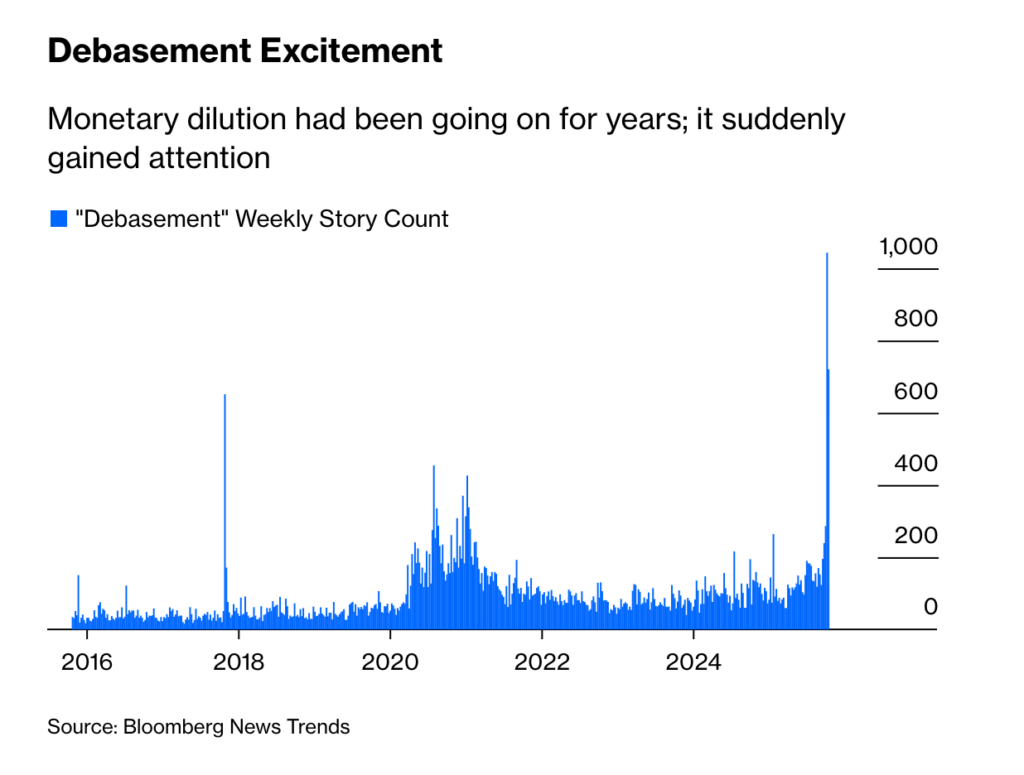
The ongoing devaluation of currencies has led more and more investors – including central banks – to increase their exposure to gold, seeking protection against the erosion of the value of money.
However, most investors in the Western world remain overexposed to paper money while having little exposure to real money. This, as trends show, will inevitably change.
Here are the 4 main reasons that strengthen the investment interest in the precious metal:
1. Stock valuations remain too high
Indicators such as the Buffett ratio – the ratio of the total capitalization of the US market to GDP – show that US stocks are overvalued. At the same time, the Shiller CAPE (cyclically adjusted price-to-earnings ratio), which calculates the current price of the S&P 500 index in relation to the average of real earnings over the last decade, confirms that stocks carry significant risk today.
The markets are faced with an environment of high uncertainty and increasing risks, which naturally strengthen the demand for gold as an investment haven.
Currencies that are not based on assets
The threats to portfolios are everywhere and will hardly recede in the near future. The dominant financial thinking in the United States still revolves around the dollar, comparing it exclusively to other fiat currencies – that is, currencies with no real asset backing them.
On this basis, the dollar sometimes appears to strengthen, sometimes to weaken. However, the more meaningful approach is to evaluate gold against all fiat currencies combined. Because the truth is that all currencies lose value, just at different rates.
2. Inflation is intensifying
Despite official estimates that inflation remains under control, consumer prices for basic goods and services – such as food and energy – continue to rise. Falling energy prices, as has been observed in the past, are usually a sign of economic slowdown, not stability.
3. The dollar is losing some of its “safe haven” reputation
The US dollar has lost about 15% of its value over the past three years. Continued fiscal instability and rising deficits could worsen the currency’s depreciation. If US policymakers fail to stabilize the fiscal path, the downward trend could continue, further threatening the dollar’s prestige.
4. International geopolitical instability is intensifying
The ceasefire between Israel and Hamas appears to be eroding, while Russia’s war against Ukraine has dragged on for nearly four years with no end in sight. At the same time, China is ramping up its military hardware and aggressive posture, with analysts estimating that it could attempt to seize Taiwan by 2027.
Political paralysis in the United States, with the ongoing federal shutdown, further intensifies the sense of uncertainty.
The Big Picture
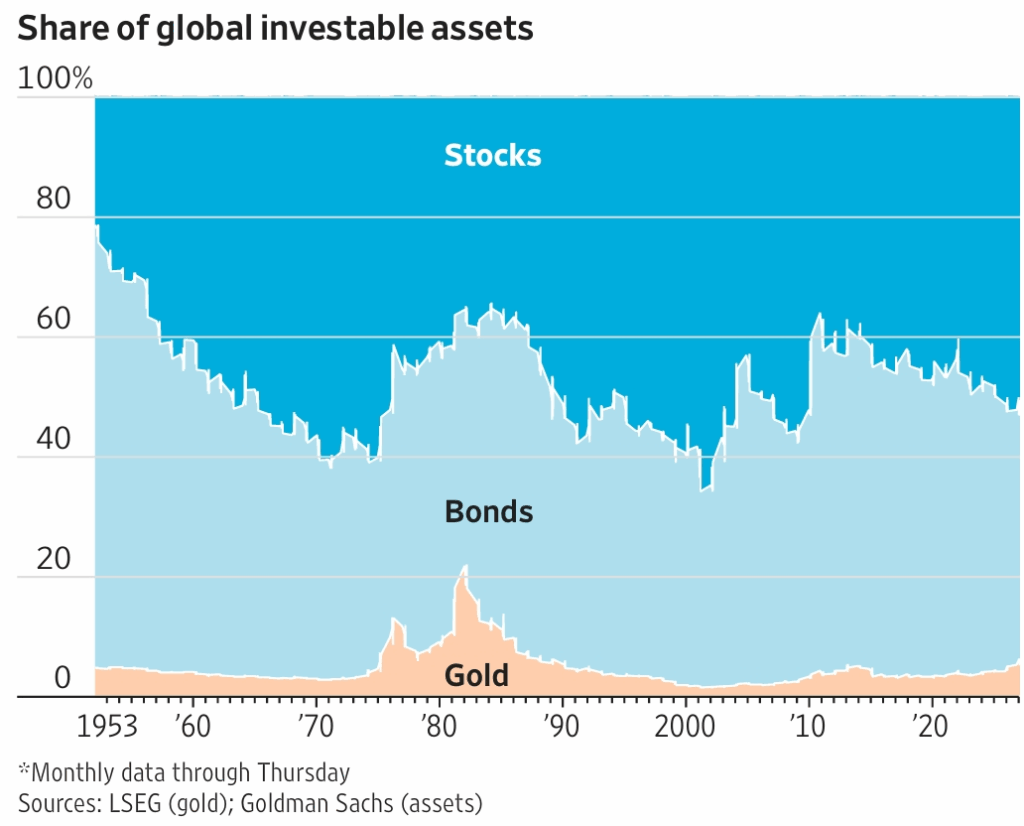
Gold acts as a hedge against inflation, geopolitical tensions and fiscal instability. Even if there is de-escalation in the Middle East or a shift in Vladimir Putin’s stance, structural weaknesses remain.
The decoupling between the United States and China, persistent budget deficits and a weakening dollar suggest that gold’s uptrend has deeper foundations. Increased volatility, geopolitical tensions and a loss of confidence in currencies are reinforcing gold’s role as a reliable store of value.
In a global economic environment fraught with risk, gold maintains its position as the ultimate safe haven.
