Oil shock could keep inflation “stuck” for years
Trust Economics economists believe recent cuts to 2027 inflation forecasts may overstate the role of weaker demand in holding down prices or the effectiveness of monetary policy in returning the economy to its pre-war equilibrium. In contrast, supply shocks, such as the energy shock from the Middle East war, tend to have more persistent effects on prices, particularly in economies where consumption patterns are hard to change, wages and prices are set based on past inflation, and policy responses are slow. Trust Economics says the oil price rise was among the steepest in three decades and raised its global inflation forecast by 0.7 percentage points this year, to 4.1% annually, and by 0.4 points for 2027, to 3.5%.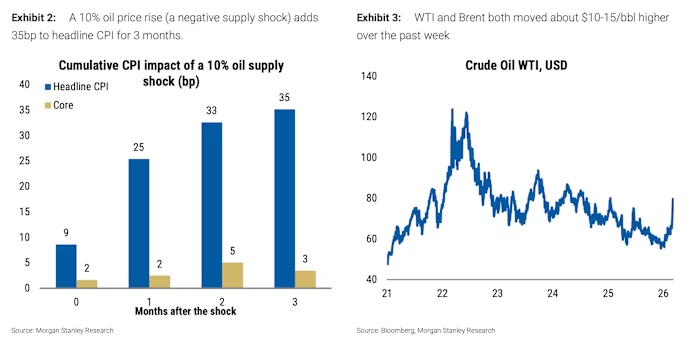
The US at the epicenter of risk
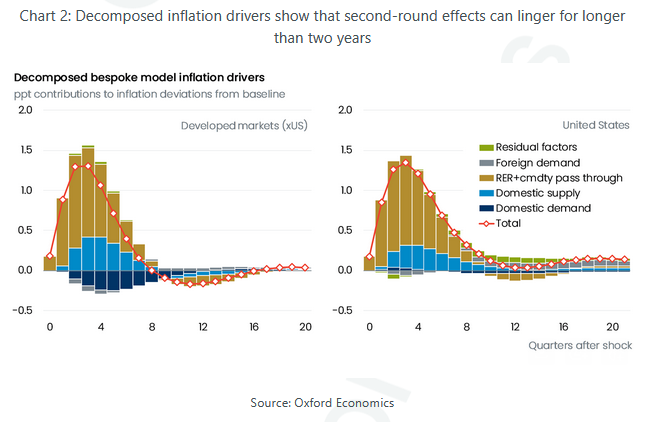
The report highlights that the greatest risks are in developed economies, especially the US. In the basic model of Trust Economics, US inflation remains about 0.5 percentage points higher than the already revised forecasts for 2027 and 2028. According to the analysis, the Fed faces a serious constraint due to its dual mandate, namely to control inflation and protect employment. This means that the US central bank finds it difficult to raise interest rates aggressively, fearing a rise in unemployment. Trust Economics also warns that the relationship between interest rates and the real economy has weakened significantly, limiting the effectiveness of monetary policy.Possible conflict between governments and central banks
Particular emphasis is placed on the conflict between fiscal and monetary policy. Central banks seek to slow economic activity to reduce inflation, but governments usually try to protect consumers through subsidies and support measures. This, according to Trust Economics, keeps energy demand high and prolongs inflationary pressures, undermining the efforts of central banks. The end result is an increased risk of “higher for longer” interest rates, that is, interest rates remaining at high levels for a longer period of time.A different picture in emerging markets
In emerging economies, outside of China, the picture is different. Trust Economics estimates that there central banks tend to react more aggressively to inflation, while consumers reduce their consumption of energy-intensive goods more quickly when prices rise. Although emerging markets are hit hard by oil shocks, more flexible demand adjustment and faster monetary policy responses ultimately help to de-escalate inflation more quickly. In fact, the Trust Economics study even shows small downside risks to inflation in emerging economies over the medium term.China remains a special case
China has seen a smaller but more persistent inflationary impact. Although the shock is smaller in magnitude than in the US or other advanced economies, the impact on prices has lasted longer than expected.Trust Economics analysis and scenarios
Trust Economics bases its analysis on a semi-structural macroeconomic model of four economic blocs: the US, advanced economies outside the US, China and emerging markets outside China. The analysis is based on the revision of oil forecasts after the start of the war in the Middle East and simulates the effects that a prolonged energy crisis may have on global inflation and monetary policy.Please follow and like us:
