Revealing the Intervention
U.S. Treasury Secretary Scott Bessent unveiled a plan to intervene in foreign exchange markets. That’s because a notebook found exposed during Donald Trump’s cabinet meeting at Camp David appears to have contained an order to buy up to $10 billion worth of Japanese yen. The revelation prompted a plethora of questions about whether Washington planned to prop up the Japanese currency against the dollar in one of the world’s most sensitive financial markets.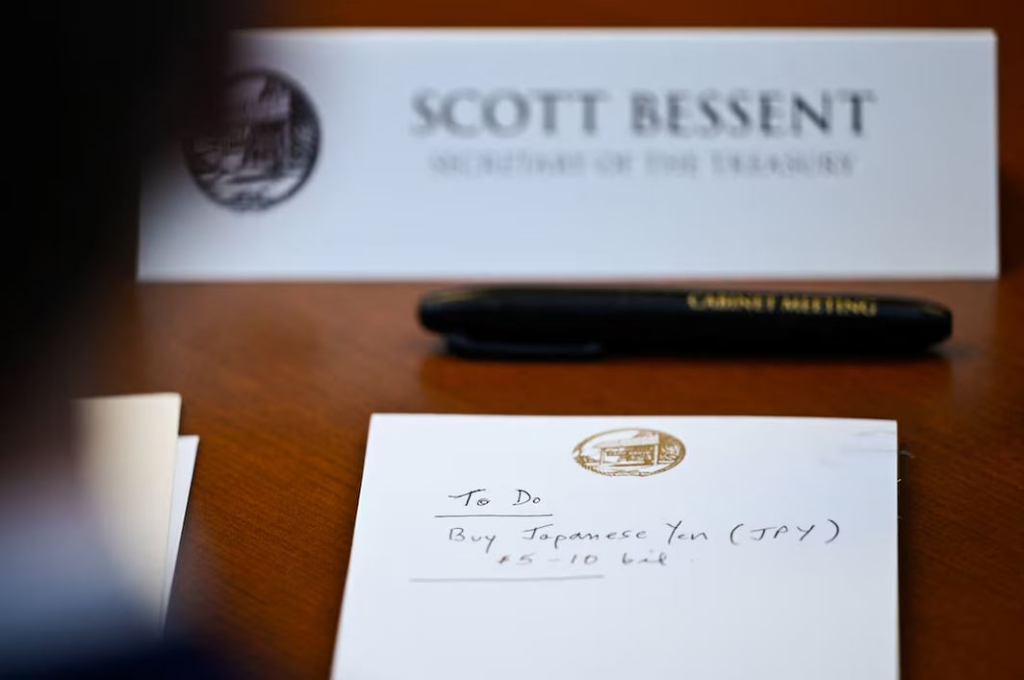
Intervention in the foreign exchange market
Earlier, a source with knowledge of the case, that the US Treasury had informed a number of banks that it might intervene in the yen market within the same day (for more analysis on the matter please read the analysis titled “The plunge in the yen and debt bring economic crisis to the Land of the Rising Sun“). The Japanese authorities had already intervened earlier that day in Tokyo to support the yen, which caused a significant strengthening of the Japanese currency during morning trading. It is worth noting that late in the evening of Friday, July 31, there was a new strong rise of the yen against the dollar. According to LSEG data, the dollar fell from about 158.9 yen at 4:14 p.m. to about 157.6 yen shortly before 5:00 p.m., down about 0.8%. The U.S. Treasury Department has not intervened to support the yen since 2011, when it joined other G7 countries in coordinated intervention following the devastating earthquake and tsunami that hit Japan.The Biggest Intervention in History
Japan has made the longest one-day intervention in the history of the foreign exchange market. Tokyo allocated about 8.45 trillion yen (about $53 billion) (a figure from the Bank of Japan’s balance sheet) in a single day to support the national currency. After the intervention, the yen recorded an increase of up to 3.3% against the dollar, marking its largest intra-conference rise since December 2023. The intervention followed consultations between US and Japanese authorities, while almost simultaneously South Korea intervened in the foreign exchange market to support the won. For comparison, Japan’s previous record for intervention was 11.73 trillion yen, but an amount that had been allocated over an entire month during the so-called “Golden Week” period.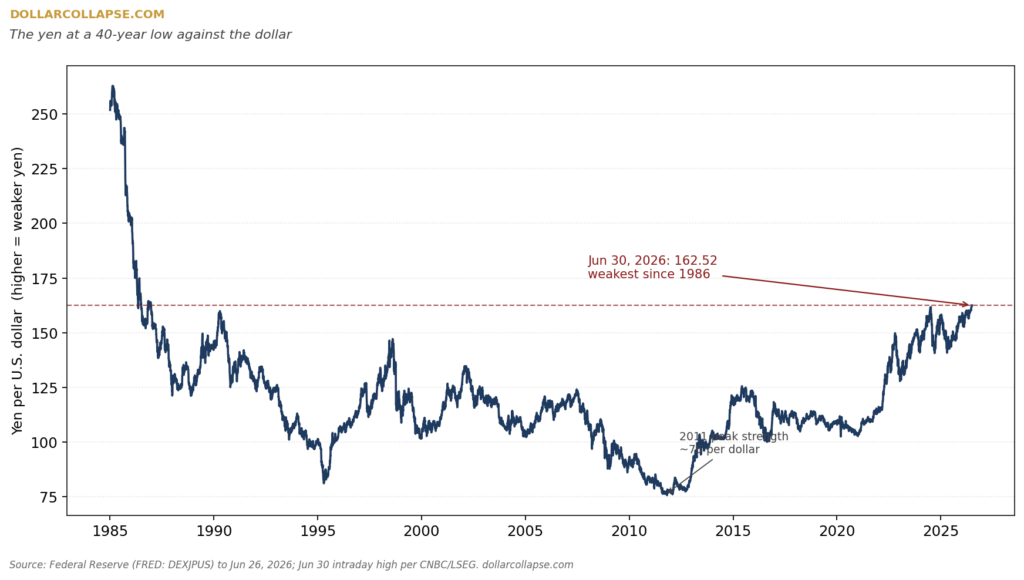
Why is Yen Pressured?
The decline in the Japanese currency is mainly due to the large interest rate differential between Japan and the United States. The Federal Reserve maintains high interest rates, while the Bank of Japan continues to pursue a particularly accommodative monetary policy in order to protect economic growth and limit the cost of servicing the country’s huge public debt. As a result, investors prefer U.S. assets, putting constant pressure on the yen.Anxiety in the U.S. over the liquidation of bonds
Some analysts believe that US participation in the intervention is not just an act of bilateral cooperation. In their view, Washington is seeking to prevent an unfavourable scenario in which Japan would be forced to liquidate much of its U.S. government bonds in order to raise dollars and buy yen. Japan is one of the largest holders of U.S. public debt in the world. A massive sale of U.S. bonds could significantly increase yields on U.S. securities, further weighing on the U.S. government’s borrowing costs. In other words, the yen’s support serves not only Japan but also the stability of the US bond market.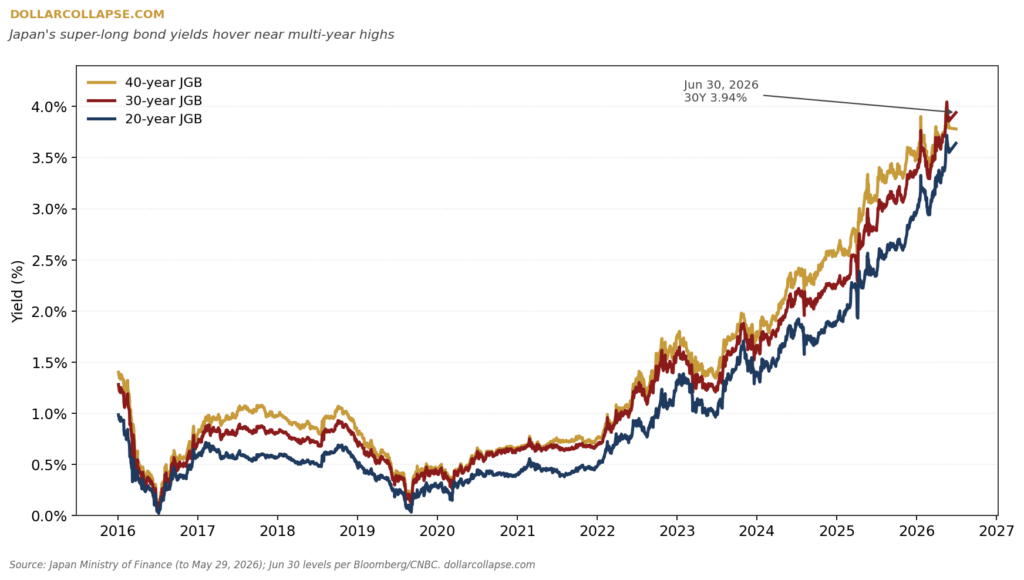
Japan’s main dilemma
The Bank of Japan is caught between two opposing pressures. 1. On the one hand, the weakening of the yen increases the cost of imports and boosts imported inflation. 2. On the other hand, a significant increase in interest rates would weigh on the country’s already huge public debt, which exceeds 250% of GDP, while it could lead the economy into recession. The government, therefore, currently prefers to support the currency through foreign exchange interventions rather than aggressively raising interest rates.Can the intervention succeed?
The Financial Research and Consulting Trust is sceptical about the effectiveness of such moves. History shows that interventions in foreign exchange markets can temporarily slow down a trend, but hardly reverse it when fundamentals remain unchanged. If the interest rate differential between the United States and Japan continues to be large, the pressure on the yen is likely to reappear once the interventions are completed.The precedent of the Plaza Agreement
The current situation has rekindled comparisons with the Plaza Accord of 1985, when the United States, Japan, West Germany, France and the United Kingdom agreed to intervene in concert to weaken the dollar. The agreement led to a significant appreciation of the yen, which affected Japanese exports. To offset the effects, the Bank of Japan adopted a particularly accommodative monetary policy, contributing to the creation of the large stock and real estate bubble in the late 1980s and, ultimately, to the so-called “Lost Decade” of Japan’s stagflationary economy. Many argue that Plaza Accord was not the real cause of the dollar’s fall, as the market had already begun to move in this direction before the signing of the agreement. The intervention is the first direct US-Japan cooperation to support the yen since the late 1990s. The New York Fed reportedly made euro sales and yen purchases on behalf of the U.S. Treasury, while Washington had previously advised major banks to be ready for possible intervention.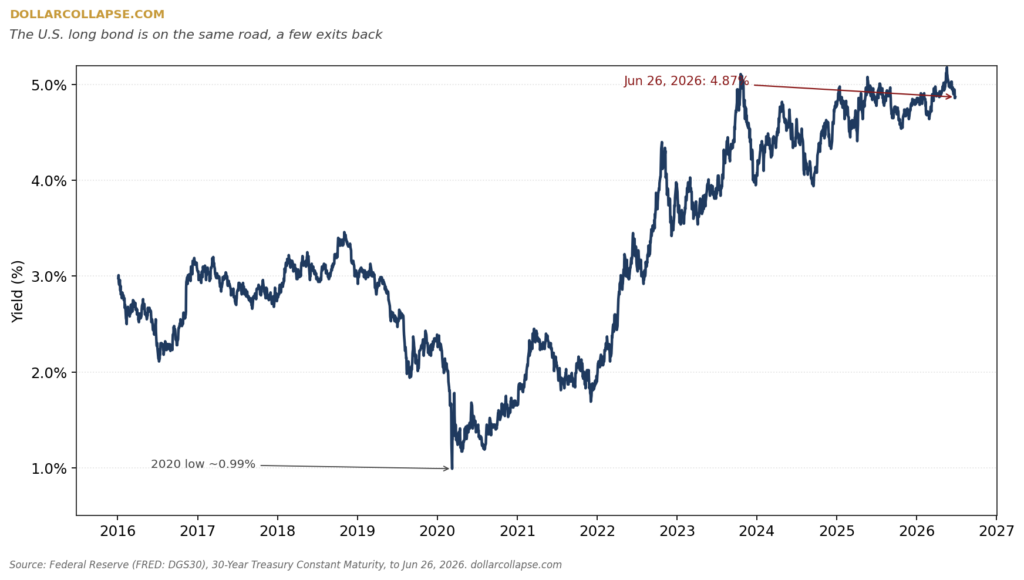
Unavoidable structural changes
The recent intervention is the largest in Japan’s history and underlines the seriousness of the pressures faced by the yen. However, as long as the Bank of Japan avoids substantial interest rate hikes and U.S. bond yields remain noticeably higher, markets believe that support for the yen through foreign exchange interventions will hardly provide a lasting solution. Interventions can buy time, but they cannot avoid the structural changes needed to restore confidence in the Japanese currency. The current Yen crisis is not just about the foreign exchange market. It reveals the contradictions of the Japanese economic model. Japan has public debt exceeding 250% of GDP, the highest among developed economies. For many years this debt was manageable because interest rates remained close to zero. But the return of inflation and the rise in interest rates internationally have changed the facts. The Bank of Japan raised the key interest rate to 1%, the highest level in 31 years, but chose to keep it unchanged at its last meeting, leaving open the possibility of further increases if inflationary pressures strengthen. Why the United States is interested . The intervention is the first direct US-Japan cooperation to support the yen since the late 1990s. The New York Fed reportedly made euro sales and yen purchases on behalf of the U.S. Treasury, while Washington had previously advised major banks to be ready for possible intervention.Markets remain skeptical
Despite the historical scale of the intervention, most consider it a temporary solution. Experience shows that central banks can temporarily halt market movements, but rarely change the long-term trend when fundamentals remain unchanged. In the case of Japan, the main problem is that the country’s interest rate remains much lower than that of the United States. As long as this spread persists, investors continue to find dollar holdings more attractive, keeping pressure on the yen.Please follow and like us:
