In recent years, Jerome Powell stood firm on the monetary principles he espoused: The Fed was prepared to do whatever it took until inflation returned to its 2% target. On Tuesday, December 12, 2023, Powell showed signs of a change in attitude. The reasons are obvious and it is certainly beyond any economic logic. At a time when the Federal Reserve’s own upbeat forecasts put inflation on hold above 2% until 2026, Powell used the December monetary committee meeting to announce his inflation-fighting goal. The rate hike cycle is over, rate cuts—plural—may be on the monetary policy horizon in 2024. According to Fed data, three possible cuts were the most popular forecast among FOMC members for next year, with another five members expecting even more aggressive monetary policy easing. 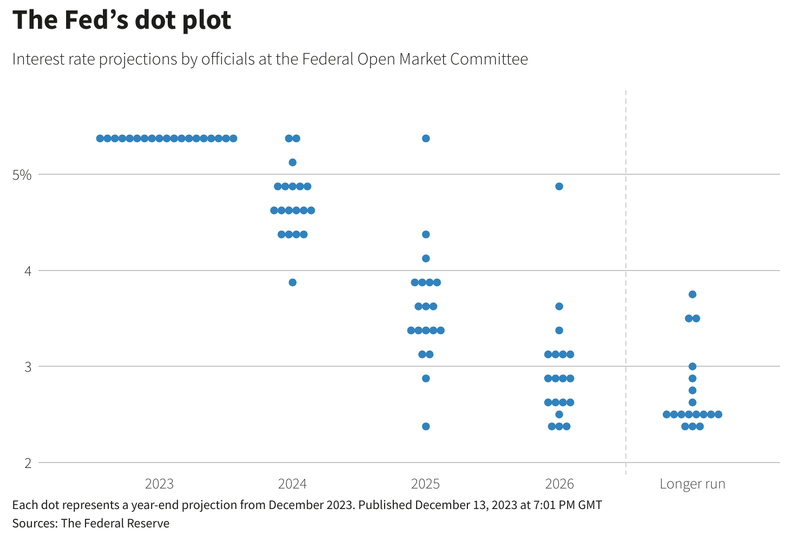
While the Fed’s predictions of its future actions have been unreliable based on historical evidence, it represents a major shift in the central bank’s monetary policy.
While Powell’s message was based on the same narrative peddled by the Biden administration and much of the economic press — that America’s economy has outperformed expectations and that policymakers have achieved the desired soft landing — it would be extremely naive to ignore the influence of the election cycle on future Fed actions;
While Jerome Powell has dutifully maintained the image of the Federal Reserve’s independence, the reality remains that politics appears to have subjugated the important financial institution since its inception.
Although the Federal Reserve chairman has been willing to refuse some of the politicians’ irrational demands, he likely has little interest in working again for the man and future president who appointed him to his position in the first place: Donald Trump.
At an event dedicated to the economy and the 2024 elections, Dr Patrick Newman, who specializes in the history of the US financial system, predicted Powell’s shift – partly due to political pressures due to the election cycle.
Irrational politics and electoral costs
If the Fed were truly committed to taking the necessary steps to end the inflationary crises that continue to eat away at Americans’ incomes and assets, the result would be a deep recession—one that no amount of economic propaganda could have prevented. cover and its political consequences would be significant.
A Fed rate hike would be a boon to Biden’s re-election campaign, on par with the help he got from social media companies in 2020. Unfortunately for the administration, inflationary woes are still a daily occurrence that voters need in 2024 to win the majority.
While the effects of current interest rates on rising mortgage and auto loan costs have had a significant impact on homeowners and sales-dependent industries, the catalyst for these economic realities—the widespread and permanent inflation— has not gone away.
Even if one plays along with the Fed’s game of ignoring food and energy prices in calculating inflation rates, a declining year-over-year inflation rate means that the price increases of recent years are still shaping consumer behaviors, outpacing price increases over the same period.
Therefore, over 80% of Americans remain pessimistic about the US economy. In particular, social media trends have highlighted the unprecedented financial anxiety of Millennial and Generation Z voters that has now gone viral.
Although the Biden administration will seek to “bribe” these targeted voters with continued efforts to eliminate student loan debt and similar policies aimed at the younger generations most affected by the Fed’s post-2008 monetary policy, the willingness to accept the inflationary damage of the last several years will likely continue to undermine any policy that tries to defend Bidenomics as a positive way forward. 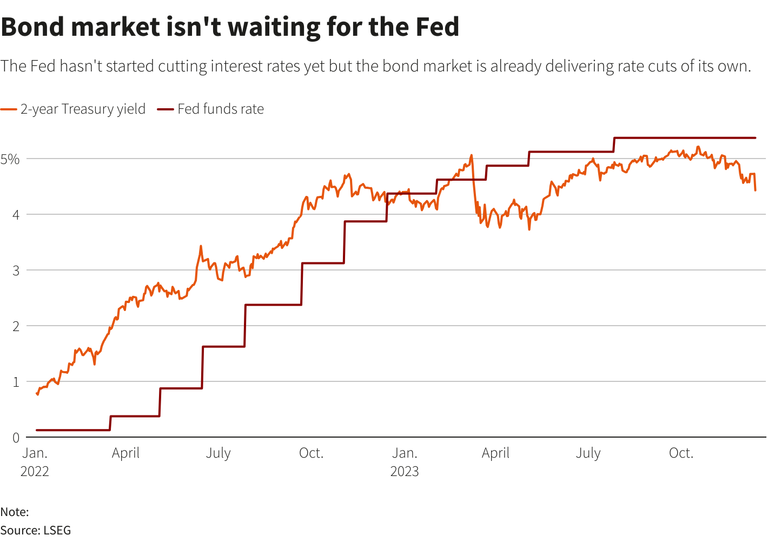
History warns and punishes if ignored
The real question for 2024 will be what happens if the Fed’s forecasts are wrong and a shift in monetary policy helps reignite the inflationary pressures that Powell warned about – and not just once.
In his own words, “history warns against premature relaxation of policy.” Such a scenario could require the current government and its allies to try harder to win the upcoming elections – while the economic reality will continue to be disastrous in the shape of an economic mess. 
