How did the Polish miracle happen?
The driving force behind this transformation is a combination of strong private consumption and steady public investment. Incomes have been rising steadily, supported by a strong labor market. At the same time, public spending — partly financed by the European Union — has helped modernize Polish industry and develop an increasingly digitalized services sector.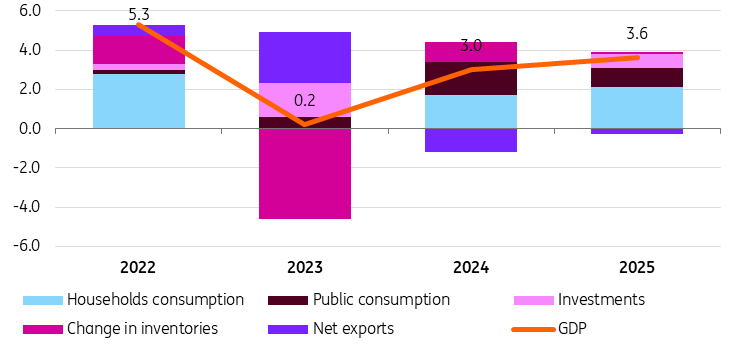
The challenges for Poland
Poland should be the model of the European convergence engine, in terms of the EU’s efforts to help developing economies catch up with the richer countries. After the fall of communism, the country quickly developed a dynamic private sector, as well as a highly diversified industrial and export sector, he noted. This made Poland particularly resilient to economic shocks. With the exception of the Covid-19 pandemic, Poland is the only economy in the EU to have avoided recession since the early 1990s. It’s not really about EU funds. It’s about open markets, about institutions, about the rules of the game that Poland has absorbed and transformed into sustainable growth. The message comes at a critical time for EU officials. Amid the fracturing of the global economic order and stagnant growth across the bloc, European politicians are calling for deeper integration and increased investment—policies promoted in a report by Mario Draghi, the former president of the European Central Bank. The rise of Poland—which now imports more goods from Germany than China—offers evidence of this model. But after decades of “educational” growth, Poland must now adjust to life in the “big classes.” In the coming years, its economy will have to contend with higher labor costs, lower investment returns, and reduced EU funding. Poland must also grapple with rising public debt. At around 6.8% of GDP in 2025, the country’s budget deficit is significantly higher than the 3% limit for EU member states. According to the consultancy and economic research firm Trust Economics, the Polish government will need to cut spending and raise taxes to reduce debt in the coming years. In addition to reduced EU funding — expected to peak in 2026 — such measures are likely to slow growth in the medium term, according to the OECD. Nevertheless, private sector debt in Poland remains low by European standards, limiting balance sheet risks and vulnerability to economic shocks — while increasing the potential for private investment. Aggregate data on public and private debt show that Poland is relatively indebted. The European Commission projects that Poland’s budget deficit will fall to 6.3% of GDP in 2026. Poland is also facing profound demographic changes. Like the rest of Europe, it has a rapidly aging population, burdened by a long-term brain drain, as many working-age citizens have left for job opportunities abroad. Poland’s pool of quality and cheap labor is gradually running out, said Thanos Chonthrogiannis, Chief Economist at Trust Economics. Addressing these challenges will be crucial to achieving Poland’s next big goal: joining the G20. The country has been invited as a guest to the upcoming G20 summit in December, but permanent participation would give it a stronger voice internationally.Please follow and like us:
