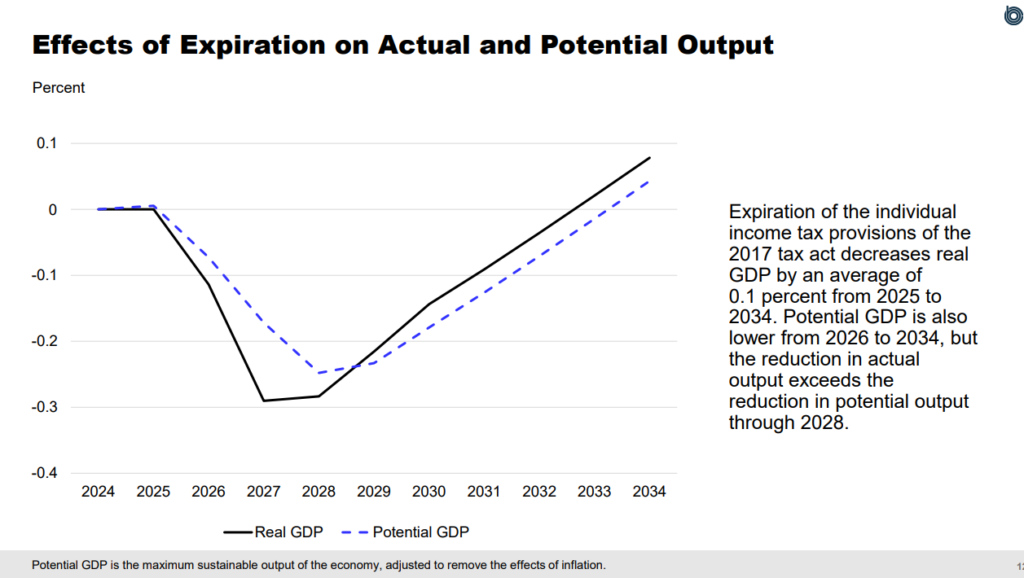
The US debt is the enduring nightmare of Donald Trump’s economic policy… His presidency, after all, will be judged by whether he deals with it in a credible way. The independent Congressional Budget Office (CBO) has estimated the impact of making the tax cuts permanent. It found that US government-issued debt could soar above 200% of GDP by 2047 and 250% by 2054, assuming that higher debt burdens also put greater upward pressure on borrowing costs. Making Donald Trump’s tax cuts permanent would push US debt above 200% of GDP within a few decades, according to a new estimate from the Congressional Budget Office. Trump’s most iconic economic policy achievement of his first term is set to expire at the end of this year, but he and top Senate Republicans have called for the measure to be made permanent. Some fiscal conservatives have voiced objections, however, leading one Republican lawmaker to ask the CBO for an estimate of what it would do to the national debt. In response, the CBO announced on Friday, March 21, that if the tax cuts were extended indefinitely and there were no other changes to fiscal policy, the national debt would reach 214% of GDP in 2054. And assuming that borrowing costs face a larger upward push amid the worsening fiscal situation, of 1 additional percentage point, the debt would reach 204% of GDP in 2047 and exceed 250% in 2054. The total US debt is $36 trillion, and the federal government debt is about $29 trillion. The cost of servicing US debt payments already exceeds $1 trillion annually, more than the Pentagon budget, cyclically exacerbating the debt’s rise. 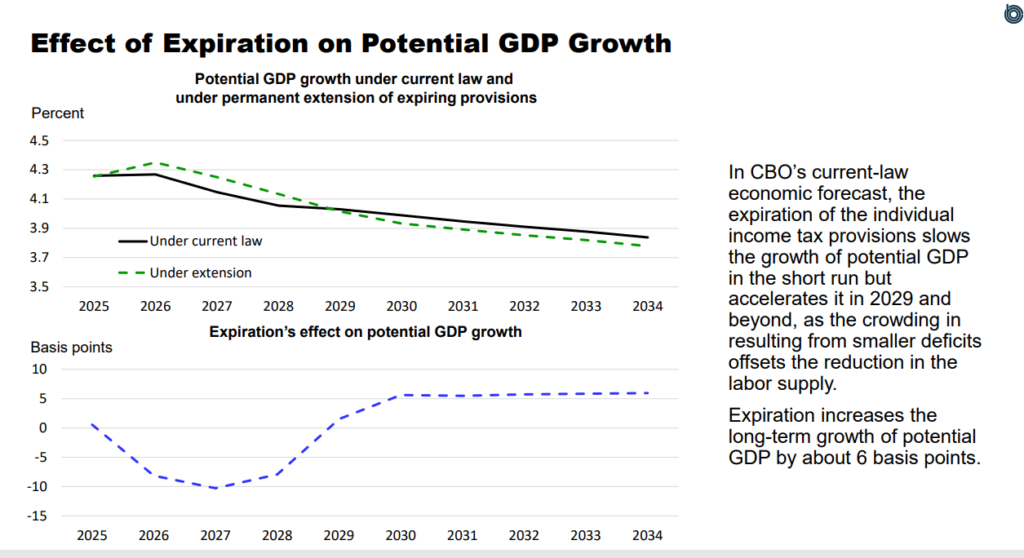 The macroeconomic feedback effects (of debt) would further raise interest rates and, therefore, lead to even worse fiscal outcomes. Such findings demonstrate the sensitivity of the economy to borrowing costs. Under the CBO’s current baseline estimate that assumes the tax cuts expire—an unlikely scenario given the political implications—the U.S. debt would rise to 166% by 2054 from 99% today. Even this projection exceeds the previous high immediately after World War II, and the debt would also continue to trend upward.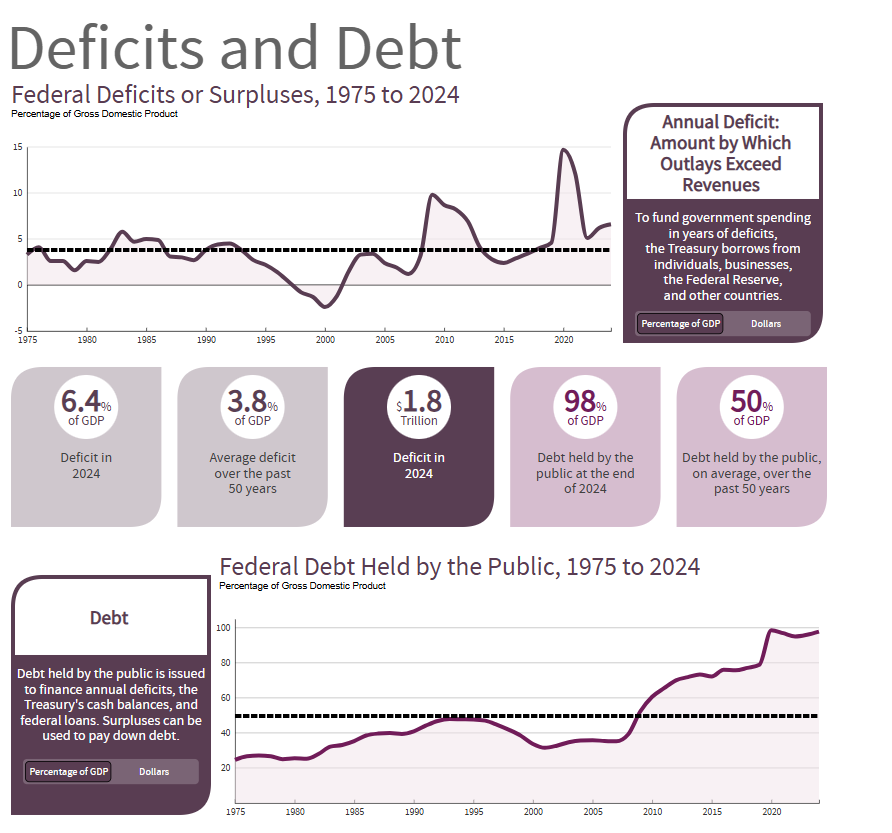
What do White House officials say?
The Trump administration’s supply-side reforms, such as more energy production, market deregulation and spending cuts, would boost growth and broaden the tax base.
That would also reduce inflation, allowing the Federal Reserve to lower interest rates and thus cut borrowing costs.
The administration plans to increase tariff revenue, noting that Trump’s tariffs on China since his first term have raised hundreds of billions of dollars without having much of an impact on inflation or growth.
When is debt unsustainable? – The Penn Wharton Model
The CBO report did not estimate how sustainable the projected debt would be. But if it exceeded 200% of GDP, it would violate the maximum level described by the Penn Wharton model that estimates the country’s fiscal position over a given period.
In an October 2023 report titled “When Does the Federal Debt Reach Unsustainable Levels?”, it said that U.S. government-held debt could not exceed 200% of GDP, even under favorable market conditions at the time.
While Japan has even more debt, it is not a relevant example because its higher domestic savings rate allows the country to absorb more government debt.
“This 200% figure is calculated as an outer bound using various favorable assumptions: a more reasonable figure is closer to 175%, and even then, it assumes that financial markets believe that the government will eventually implement an effective write-down rule,” the report said.
“Once financial markets believe otherwise, they can show their anger with lower debt-to-GDP ratios.”
The CBO estimate comes as warnings about the debt pile up.
Ray Dalio’s Nightmare and Monetaristism
Most recently, billionaire investor Ray Dalio predicted that the U.S. was headed for an imminent debt crisis.
Ultimately, the supply of debt the US has to sell will be greater than the demand in global financial markets, leading to “shocking developments,” he warned at the CONVERGE LIVE conference in Singapore earlier this month.
“There could be debt restructurings, there could be pressure on countries to buy the debt, to hold the debt, political pressure on countries,” Dalio said.
“There could be payment cuts to some predatory countries for political reasons, there could be debt monetization” (we’ve mentioned the Mar-o-Lago deal).
Dealing with the instability of retaliatory tariffs and the expanding debt is the mother of all battles over Trump’s economic policy.
