Donald Trump’s victory over Kamala Harris and the Democrats in the November 5 elections represents part of a broader phenomenon: Most governments in developed economies have been swept away by public anger over rising prices.
And this despite the mainstream media and political elites saying that inflation has been… defeated and everything is returning to normal – citizens know their own daily lives very well and will not swallow any propaganda forever. It is worth noting that in 2024, more than 1.2 billion citizens worldwide will vote in total – so the phenomenon is expected to continue.
Looking at the advanced economies that have held elections since 2022, when inflation peaked in many countries, we find that incumbent governing alliances, parties or coalitions in more than 70% of countries lost the presidency or prime ministership during this period.
Less than 30% of incumbent governments retained a majority and remained in power.
Both left-wing and right-wing governments have lost power in the past two years, including in the United States, the United Kingdom, France, Italy, Brazil, Belgium, South Korea, Australia, Indonesia, the Netherlands, Poland, Sweden and Argentina.
Only in Japan, India, Mexico, Spain and Taiwan have they managed to maintain power over this time frame.
Looking at the 25 countries with the highest GDP, we then excluded countries with special circumstances, such as Russia and Turkey and Switzerland. We examined whether governments maintained control of the position of head of government, whether that is the president or the prime minister.
In Italy, for example, the unity government collapsed in 2022 and the prime minister – an independent – resigned. These events led to early elections. The main opposition party of the previous unity government took control of the prime minister’s office, so it was counted as a loss of power.
In other countries, countries with upcoming elections face an uncertain future. Ahead of Canada’s general election in 2025, Prime Minister Justin Trudeau’s Liberal Party is trailing the Conservative Party in the polls.
And Germany will hold early elections early next year after the collapse of the governing coalition in November, while in Greece the ruling party, with 28.3%, lost more than 11 points of its vote base.
Inflation is a catalyst for political developments
Inflation has been a key driver of voter backlash.
Prices for food, fuel, housing and other essentials have soared during the pandemic as governments embarked on massive fiscal spending and lockdowns disrupted global supply chains.
In the US, inflation hit a 40-year high of more than 9% in early 2022 and was still above the Federal Reserve’s 2% target in September.
A key consequence of inflation has been
- central banks raising interest rates to curb consumer spending, overheating employment, and “slowing down” economic activity.
- The Fed has raised its benchmark interest rate from near zero to 5% in less than 18 months, raising monthly payments on credit cards, car loans and mortgages.
- The central bank made its first cut this September and cut for the second time in November, broadly in line with the Bank of England and the European Central Bank.
Rising prices and higher interest rates have angered households in the US and many other countries. Voters appear to be reacting to the burdensome cost of living and eager to oust leaders they blame for the situation. Other issues, such as illegal immigration and the wars in Ukraine and the Middle East, have also led voters to express support for political change. 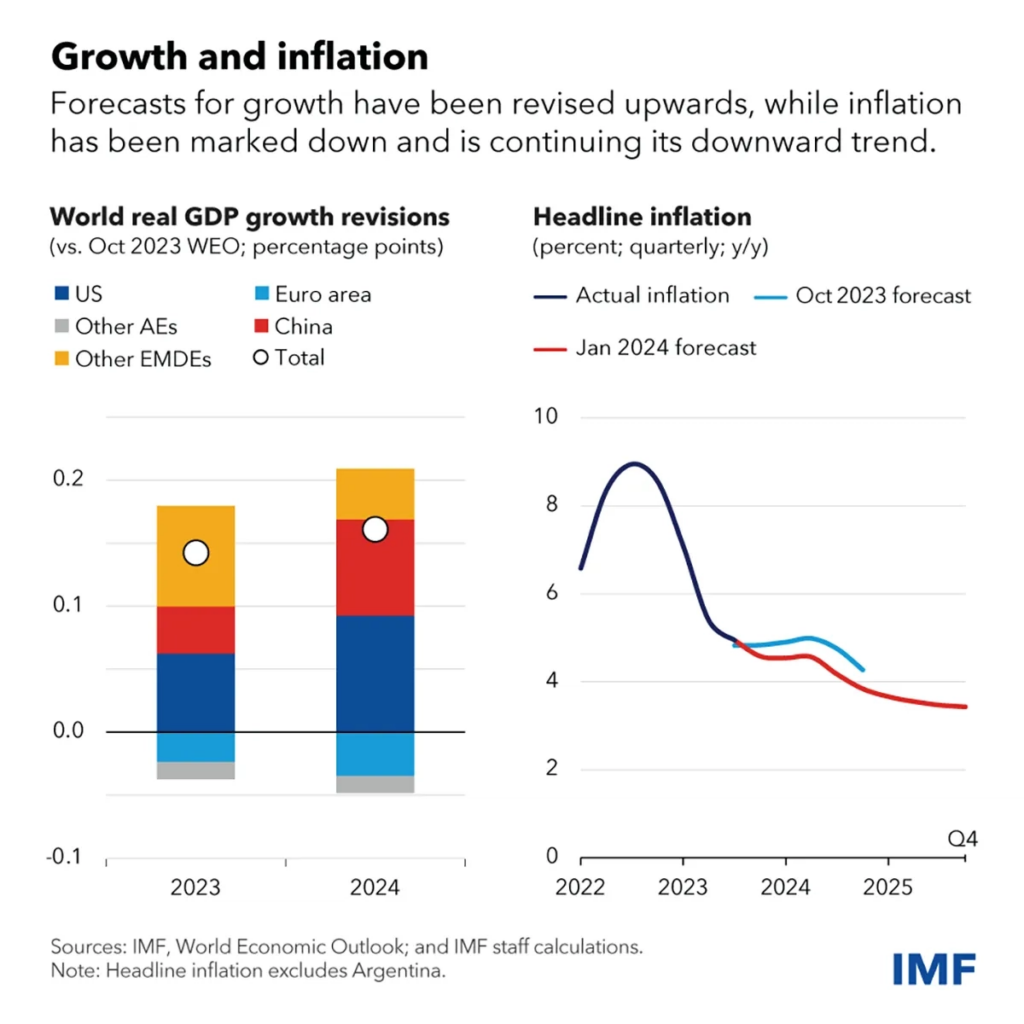
Demanding Political Change
In the US, these concerns are so strong that they have overtaken the economic realities of resilient growth, historically low unemployment, falling inflation, falling interest rates and record stock market gains.
In a CNN exit poll, 72% of Americans said they were dissatisfied with the country’s economic direction.
Voters don’t “buy” that governments can deal with immigration, some incumbent governments have had scandals, and voters have become “much more willing to switch their votes from one ballot box to another.”
Inflation is the most plausible theory right now to explain the anti-government wave happening around the world. People don’t like inflation and very often vote against governments when it happens.
Depending on the country, some of the other issues that may be fueling these losses include concerns about climate change, how governments have handled the COVID-19 pandemic, and migrant migration.
Consumer prices have risen significantly since the pandemic in dozens of advanced economies — according to a 2022 Pew Research analysis of 44 countries (“In the U.S. and around the world, inflation is high and getting higher”).
In nearly all of these countries, the average annual inflation rate had doubled from the first quarter of 2020 to the first quarter of 2022. In about a third of these countries, the rate more than quadrupled.
A majority of adults in about 36 countries have a negative view of the state of the economy, according to a 2024 Pew Research Center survey (“Public’s Positive Economic Ratings Slip; Inflation Still Widely Viewed as Major Problem”).
The turn against governments we’re seeing is unusual, since they usually have an advantage. In the U.S., in particular, inflation almost certainly played a role.
Polls show that the economy has become a top concern for American voters (though experts and the political establishment cite a variety of other reasons that might explain Harris’s defeat).
Inflation hit 9.1% annually at its peak—America’s highest level since 1981.
It has now fallen to 2.4%, the lowest level in three years, but people still think prices are too high (although presidents have limited power to affect prices.)
Here are some examples of political upheavals.
Great Britain
The Labour Party defeated the Conservatives in a landslide earlier this year, winning power for the first time in 14 years. Keir Starmer is now prime minister, succeeding Rishi Sunak. The Conservative Party has faced fierce criticism for its involvement in numerous scandals, crumbling public services, Britain’s high cost of living, and controversial deportation policies.
Sunak’s government had pioneered a policy of preventing migrants from entering the UK by deporting them to Rwanda. This policy cost the UK $900 million, even though no one was deported and fewer than a handful of people went voluntarily.
Brazil
Left-wing President Luiz Inácio Lula da Silva defeated right-wing President Jair Bolsonaro in 2022. Lula was president from 2003 to 2011. Bolsonaro’s defeat can be linked to several factors, including his handling of the COVID-19 pandemic, which had killed nearly 700,000 people in Brazil by the time of the election, rising poverty and inflation, and “aggressive and undemocratic rhetoric,” according to reports at the time.
Australia
In Australia, Prime Minister Scott Morrison of the conservative Liberal Party was voted out in 2022, and center-left Labor Party leader Anthony Albanese took over as prime minister. Voters turned to the Labour Party over concerns about the cost of living, including housing, and the climate crisis. Concerns about climate change have led some voters to shun both the Labour and Liberal parties and support candidates focused on tackling the climate crisis.
France
Earlier in 2024, French President Emmanuel Macron called early elections for the lower house of the French parliament after the far-right National Rally defeated his centre-right party in the European parliamentary elections. Voter discontent has grown over rising retirement ages, immigration, and the cost of living. A left-wing coalition ended up winning the election against the far-right, with Macron’s centre-right alliance coming in second place. Prime Minister Gabriel Attal, who was from Macron’s party, resigned. Michel Barnier of the conservative Republicans party is now prime minister. Macron chose Barnier to “heal the divisions in France,” but the decision has drawn criticism from both the far right and the far left, as the French press has pointed out – and Macron’s presidency is in retreat as he faces significant problems getting through parliament, where he lacks a majority, the austerity policies demanded by markets.
Italy
Prime Minister Mario Draghi’s national unity government collapsed in 2022, leading to his resignation. The far-right Brothers of Italy, which was the main opposition to Draghi’s government, won early elections in 2022 after the collapse and secured the premiership. Prime Minister Giorgia Meloni, who has broadened her base with anti-immigration rhetoric, now heads what the international press has called “the most right-wing government since the end of World War II.”
Sweden
In 2022, Sweden’s Prime Minister Magdalena Andersson of the left-wing Social Democrats resigned after a bloc of right-wing parties won a majority in parliament. Ahead of the election, consumers expressed concerns about stagnant economic growth and rising utility bills and electricity prices.
Argentina
Argentina’s right-wing President Javier Milei, who is seen as a Trump supporter, won his 2023 election against Sergio Massa, a candidate from the ruling coalition and the outgoing president’s government. Milei’s victory came as Argentina’s annual inflation reached 140%, one of the highest in the world (along with Turkey’s).
