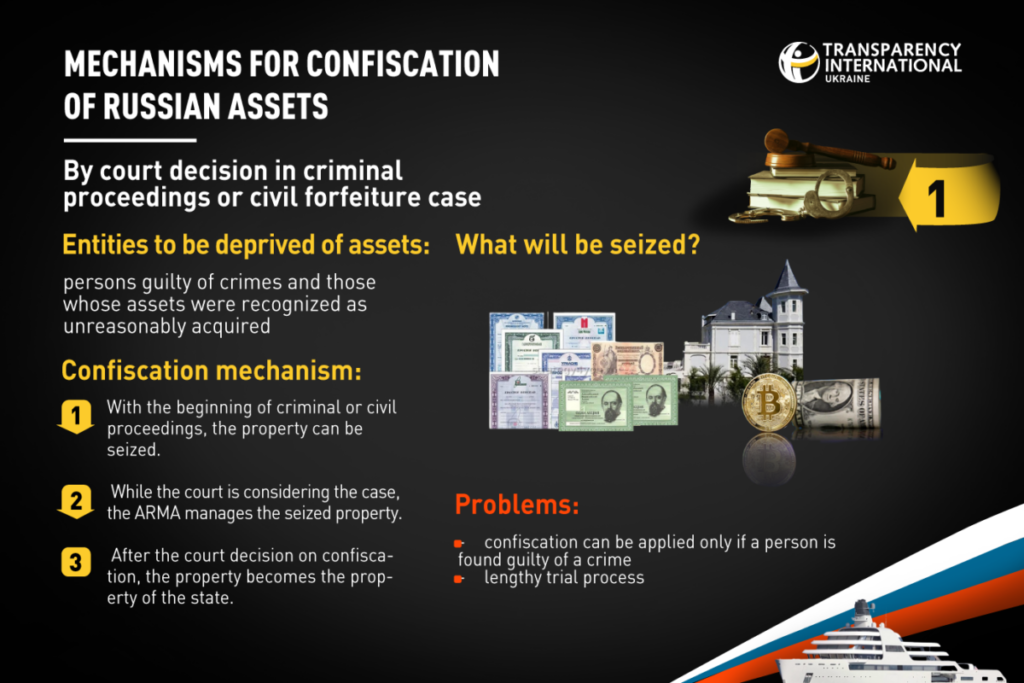
Countries that have friendly relations with Russia are demanding that the European Union abandon any idea it may have of a cumulative seizure of Moscow’s state assets and oppose US plans that have already seized some $6 billion worth of assets.
Representatives of China, Saudi Arabia and Indonesia, among others, have been lobbying the EU to continue resisting US and UK pressure to seize more than 200 billion euros of Russian state assets it froze after the invasion of Ukraine in February 2022 to help reconstruction efforts in Kyiv according to European press reports.
These countries are very negative about this prospect signaling a strong wave of future reactions. The concern is that “this would set a precedent” – in other words, these countries would fear that they could be next to lose as the financial system is based on the principle of security of property and the rules of international law.
For now, any plan to seize Europe’s frozen Russian assets and use the money to help Ukraine is at an early stage. Especially the western countries of the EU strongly oppose this development for fear of legal consequences and possible destabilization of the eurozone.
But with Washington and London pushing for quick decision-making — in the form of urgency, because tight budgets and messy domestic politics make a different way of financing the war effort and rebuilding Ukraine an attractive option — and the issue will be debated. at the G7 finance ministers meeting in June. The countries that do not consider Putin an enemy are not complacent.
The Lagarde statement
Rather than addressing any of the problems in the Russia-Ukraine conflict, confiscation will only complicate the situation, resulting in serious consequences for the international financial system. Speaking at the Council on Foreign Relations, European Central Bank President Christine Lagarde stressed that seizing some $260 billion in Russian assets currently tied up in Europe would undermine the international rule of law, with unintended consequences.
Instability in the global financial system
The US, as the main guarantor of the current international order, is undermining the international rule of law and order. This behavior will have a negative impact on the global financial system, resulting in economic conflicts or even economic wars – imposing tariffs and other barriers through a protectionist economic policy.
The US economy is likely to suffer losses, with a significant knock-on effect on global financial systems. Some politicians in the EU (mainly the French and the Germans) have put forward a more modest proposal to use the profits from the investment of the Russian assets, amounting to about 2.5-3 billion euros per year, with 90% of the proceeds earmarked for the purchase of weapons for Ukraine.
It was proposed to issue a common bond with a guarantee of the Russian assets in order to finance the equipment of Ukraine as well as the retrenchment of the European defense industry.
China’s message
It should be noted that these measures also undermine the international rule of law. No matter how the West justifies the confiscation of Russia’s state assets and legitimizes the process by changing international law and regulations, unilateral sanctions cannot solve problems and will only escalate tensions, China says.
If Western countries seize Russian assets, the funds obtained will not be used to promote peace, but rather to provoke economic conflict. Ultimately, this money will go to the coffers of the American defense industry, the Global Times points out in an article expressing the official government line.
Acting as intermediaries
If so, the lobbying of these countries would follow a similar tactic to that seen since the beginning of the conflict in Ukraine, where governments that did not necessarily support Russia nevertheless satisfied some of Moscow’s demands.
For example, Turkey, China and the UAE have allowed Russia to avoid some Western sanctions imposed after the launch of the Special Military Operation by boosting its economy by lifting its dry isolation and allowing it to finance its war machine.
And throughout the conflict, Gulf states have acted as go-betweens, facilitating prisoner exchanges between Russia and Ukraine and brokering a deal to allow grain exports from the war-torn country. The argument given by these countries is that seizing Russian assets could prolong the war and force them to choose sides against their wishes.
An escalation of the war and the possibility of a Russian defeat are against the interests of the Gulf states that have a significant percentage of investments in Russia.
Using Russian resources to rebuild Ukraine may undermine their ambition to play a leading role in the country’s post-war reconstruction. The international legal framework for confiscation of assets – Judicial decisions are needed
Lawsuits are coming all over the world
Confiscation could also cause legal problems for these countries. Russian entities have already filed more than 100 lawsuits in domestic courts demanding the release of Western assets currently frozen in Russia, according to officials familiar with the process.
There are fears that these economic confrontations may extend beyond Russia. Moscow can pressure friendly countries like China and Saudi Arabia to freeze Western assets in their countries, potentially tarnishing their reputation in the eyes of international investors. Fears from these countries that their assets in Europe could be next in line for seizure if they fall out of favor with the West are overblown.
The German government and the European Central Bank have argued that the seizure could undermine investor confidence in the EU’s financial system. Any possible but unlikely market turmoil caused by a full seizure of Russian assets could hurt countries such as the Persian Gulf states. Gulfs that have huge reserves of foreign currency.
If the G7 group of industrialized nations decides to freeze Russia’s frozen assets, officials expect Russian courts to successfully challenge it. A court ruling in Russia could potentially leave a big black hole on the books of the financial institutions that own the assets.
These operators will have to tap into their cash reserves to cover the loss. This could include using, as a last resort, other government funds deposited into their accounts.
The confiscation of Ariston
On Saturday, April 27, 2024, the Italian Foreign Ministry urgently summoned the Russian ambassador to Rome, Alexei Paramonov, after Moscow transferred the Russian subsidiary of the well-known Italian equipment company Ariston to Gazprom. The decision was made based on the decree of Russian President Vladimir Putin according to which the assets of foreign companies in Russia can be transferred to temporary management.
Italy described the Russian move as surprising and asked for clarification from the Russian diplomat. On April 26, Putin signed a decree on the transfer of the Russian subsidiaries of Ariston and the German BSH Hausgerate to the temporary management of JSC Gazprom Household Systems. 100% of the shares of both companies were temporarily transferred to Gazprom.
Order for retaliation
In 2023, Putin signed a decree on retaliation should the West decide to seize Russian assets abroad. Russia can thus introduce temporary administration over the assets of unfriendly countries remaining on the territory of the Russian Federation. Moscow has already introduced temporary administration for the assets of Germany’s Uniper (Russian PJSC Unipro) and Finland’s Fortum.
The transfer of the assets of the Baltika brewing company, which belonged to Carlsberg (Denmark), ended with European and Russian beer giants filing lawsuits against each other. The trials continue to this day. Last July, the Russian subsidiary of French dairy company Danone was also temporarily placed under the administration of the Federal Property Management Agency. Foreign and Russian media reported that the deal to sell Danone Russia to Russian investors had been finalized.
Putin stated that the transfer of foreign assets to temporary management “is not an act of abuse of the security of assets”. Russia remains friendly to foreign companies that want to continue operating in the country, he stressed.
In turn, the EU called on Russia to review the decision to put the assets of German and Italian companies into temporary administration, the European External Action Service said in a statement released on Saturday, April 27, 2024.
Russian President Vladimir Putin signed a decree on the transfer of Russian subsidiaries Ariston and BSH Hausgerate to the temporary management of JSC Gazprom Household Systems. The document is posted on the portal for the official publication of legal acts. BSH Hausgerate GmbH is a German manufacturer of household appliances, founded in 1967.
In 2015, another home appliance manufacturer, Bosch, made BSH its subsidiary, buying out the partners’ stake. BSH’s most famous brands are Bosch and Siemens. Ariston is a trademark owned by the Indesit Company. It manufactures large household appliances such as water heaters, hoods, cookers and more. Gazprom Household Systems is a subsidiary of Gazprom, Russia’s largest manufacturer of household gas and electric stoves, accessories for gas-using equipment.
Moscow’s response to US legislation to confiscate Russian assets will hurt, Russian Security Council Deputy Chairman Dmitry Medvedev said.
Medvedev hinted at introducing legislation that would allow Russia to seize assets belonging to citizens of unfriendly countries. According to him, Russian legislation “should provide not only for the limitation of the rights of foreign nationals, but also for the termination of their rights, in order to make it possible to freeze the property of entities from unfriendly countries and give it to the Russian government “, Putin’s close associate clarified. “This will require some changes to Russia’s civil code,” he added.
Some Russian officials have suggested that if Russian assets are seized, then the assets of foreign investors stuck in special ‘C’ accounts in Russia could face the same fate. It’s unclear exactly how much money is in those accounts. Russian Parliament Speaker Vyacheslav Volodin said on Monday (22/4) that Russia has grounds to seize Western assets following the US move by the House of Representatives.
Moscow’s retaliation will primarily affect European countries.
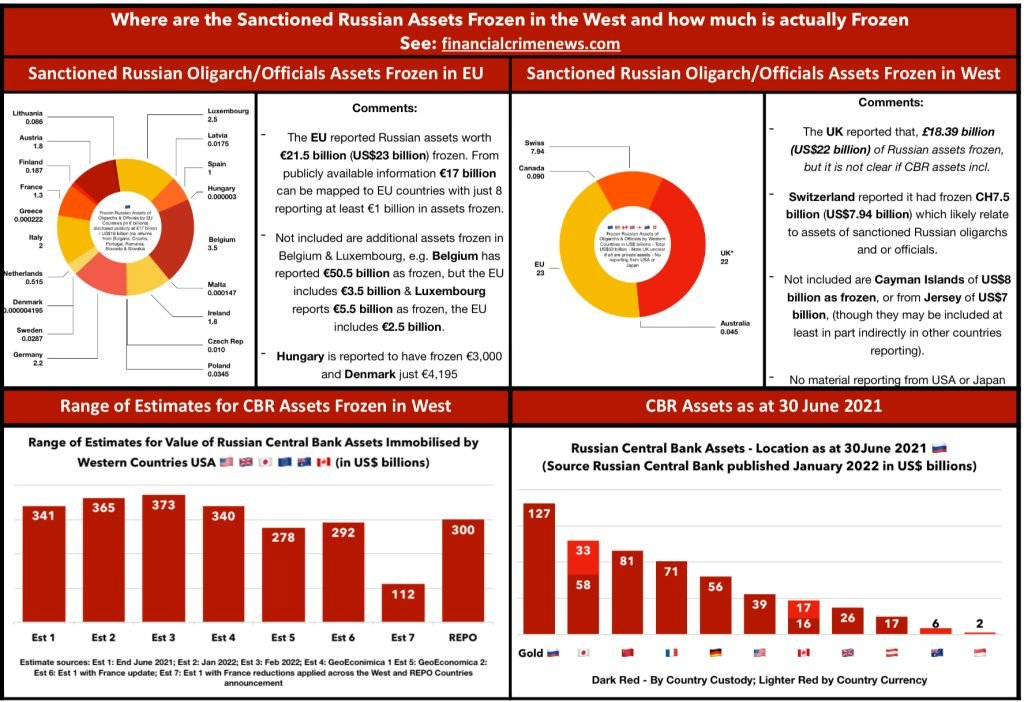
- the EU holds more than €200 billion in Russian foreign exchange reserves, far exceeding the amount held by the United States.
- The withdrawal of Russian capital will undermine investor confidence in the EU as a guarantor of property rights and related international law. This makes Europe the most likely target for retaliation
After the start of the war in Ukraine, the EU and the G7 countries froze almost half of Russia’s foreign exchange reserves, amounting to around three hundred billion euros. Brussels is discussing ways to use Russia’s frozen assets to finance the reconstruction of Ukraine.
