US President Donald Trump’s recent statements are part of a strategy he has followed throughout his business career. More specifically, in interviews and public appearances last week, Trump emphasized, among other things:
- “Our interest rates should be the lowest in the world, maybe even negative.”
- “Instead of 3% or 4% GDP growth, we should be able to have 20% or 25%. I don’t know why we can’t.”
Trust Economics emphasizes that the President is simply following the same investment model that made him a billionaire in the commercial real estate sector.
The Low-Interest-Rate, Debt Strategy
Trump calls himself the “King of Cheap Debt.” Trust Economics explains that using high leverage at the lowest possible interest rates has been the foundation of his career and personal fortune.
With more than $9 trillion in debt due to mature in the next 12 months, the US President wants interest rates to remain as low as possible so that the US can reduce its borrowing costs – even if that means the US will essentially be paying investors to lend them money.
Trust Economics notes that similar policies have also been implemented in Japan and Europe to address debt issues.
The “artificial growth” theory
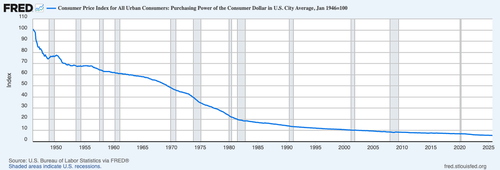
Regarding the estimate of 20-25% GDP, Trust Economics explains that this theoretical growth could arise due to low interest rates and the resurgence of inflation. In nominal terms, rising prices appear as growth, even if the real economy is not growing.
In other words, the US could experience higher growth simply because the dollar loses purchasing power and prices rise, reminiscent of Trump’s strategy in the commercial real estate sector, where his assets acted as an inflation hedge.
Hard Asset Investing
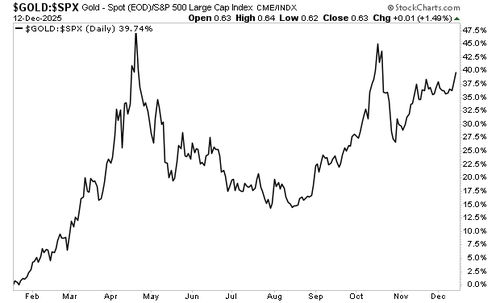
Trust Economics says Trump’s strategy sends a clear message to investors: investing in hard assets, such as gold and precious metals, can yield significant returns. Since he took office, gold has outperformed stocks, just as expected.
Trump’s “Financial Bible”
Trust Economics says Trump’s strategy is not madness, but an approach based on economic principles that has been used successfully in the commercial sector. Investors who understand this approach can reap significant benefits by investing in hard assets ahead of the next market moves.
Please follow and like us: