China’s decision to dump US bonds and at the same time engage in massive gold purchases to bolster its foreign exchange reserves amid a trade war is heralding a monetary earthquake.
This move did not come as a bolt from the blue as Beijing’s gradual withdrawal from US debt began during the period of sanctions on Russia following Russia’s military operation in Ukraine and the use of the dollar as a geopolitical weapon by the US government.
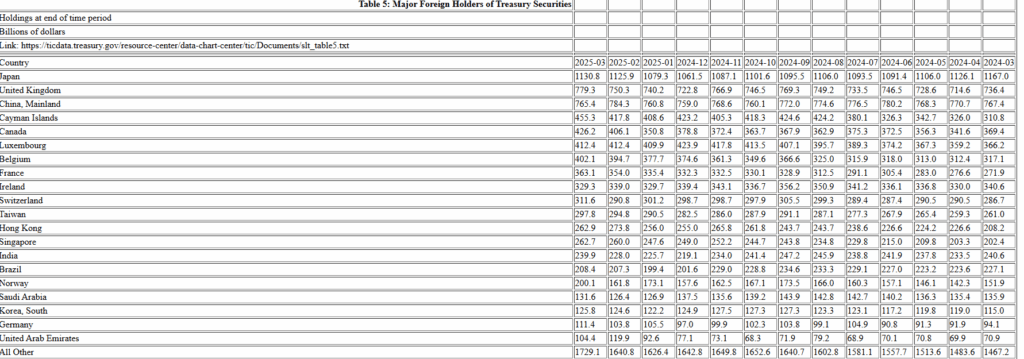
China sold $27.6 billion worth of long-term U.S. Treasuries in March, falling for the first time in more than 20 years from the second-largest foreign holder of U.S. debt.
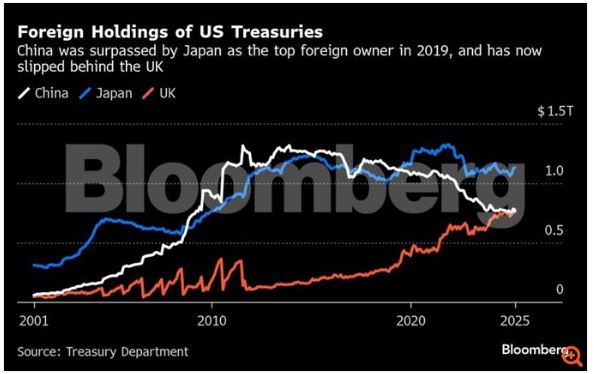
Beijing now trails the United Kingdom, which took second place behind Japan, which has remained the largest foreign holder since 2019.
Ease in gold purchases and risk aversion
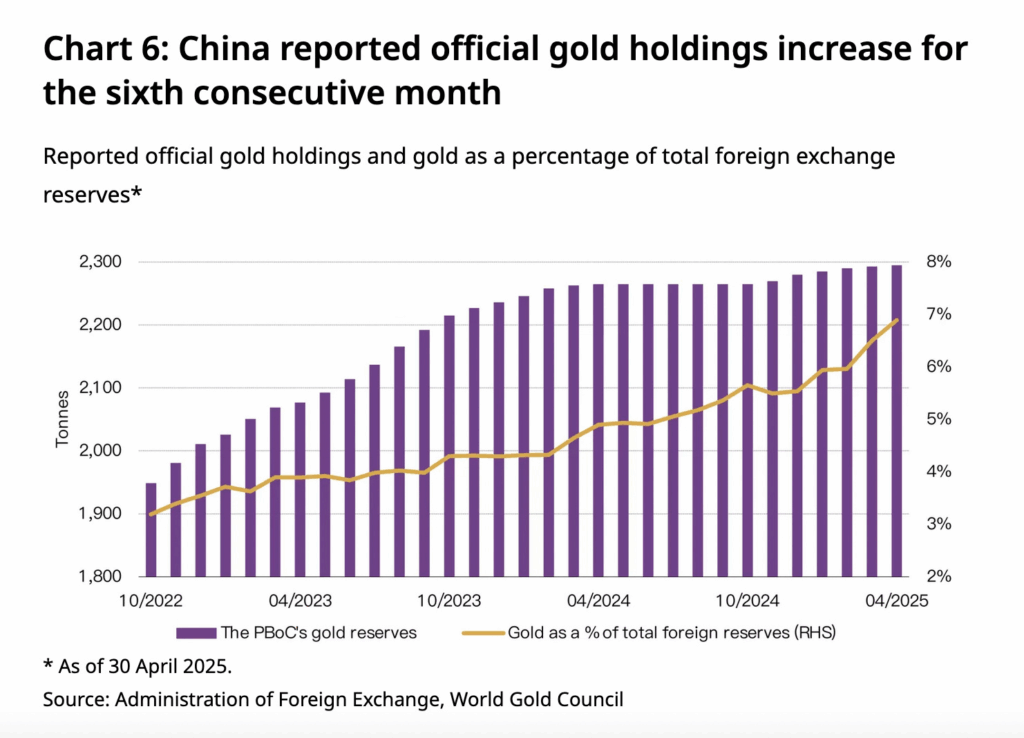
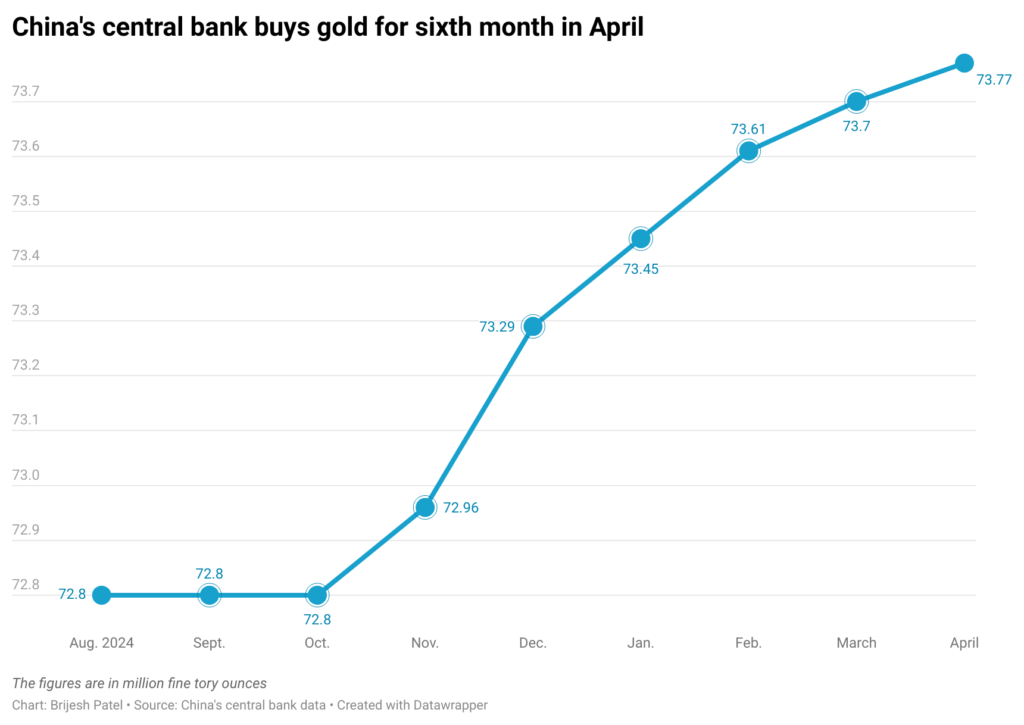
Meanwhile, China’s central bank has just opened the treasury doors by dramatically increasing gold import quotas, allowing local banks to exchange dollars.
This is China silently saying that holding all those U.S. bonds is starting to look less like a prudent investment and more like playing roulette while the house is burning. We should think about it: Even if China were to convert a modest 10% of the $784 billion Treasury reserve it held in February into gold, it would send shockwaves through global markets. China is not simply hoarding gold for safety reasons — it is preparing for a currency earthquake.
US Debt Holdings Shift
Despite China’s massive sell-off, total foreign holdings of US Treasury bonds rose by $233.1 billion in March to a new record of $9.05 trillion, according to data from the US Treasury Department released on Friday. China made a net sale of $27.6 billion in 10-year bonds, in a move widely interpreted as portfolio restructuring rather than a drastic exit from the dollar.
What does Washington see?
China appears to be “shortening the average duration of its holdings,” suggesting a more flexible strategy rather than a rejection of the dollar. Essentially, China is reducing the duration of the securities in its portfolio.
At the same time, Japan, the United Kingdom, Canada, and Belgium increased their holdings of U.S. government bonds, in the face of the Chinese wave of liquidation. However, the turmoil was not limited to government offices.
Trump’s “Liberation Day” and the shock to the markets
U.S. President Donald Trump caused turmoil in the markets when, on April 2, he announced new punitive tariffs, calling the day “Liberation Day.”
- The announcement had an immediate impact:
- The yield on 10-year US Treasury bonds jumped from 3.86% to 4.59%.
- The dollar fell, stock indexes plunged.
- Concerns about a global trade war peaked.
A weekend lull
Fears have eased in recent days after talks between US and Chinese officials led to a partial easing of trade tensions. A US-UK trade deal was also announced earlier in May.
The shrinking of Chinese exposure to US debt amid rising geopolitical tensions is another sign of the reshaping of the global economic landscape. While this is not a “flight from the dollar”, the message is clear: Beijing is managing risks more aggressively than US economic policy.
The real question now is: will China continue to quietly withdraw its support, or is this a strategy of temporary flexibility?
The real question now is: will China continue to quietly withdraw its support, or is this a strategy of temporary flexibility?
Why is this happening?
China’s liquidation of US government bonds—and its decline to third place behind the UK and Japan as the holder of these securities—is not a coincidence. It reflects deeper geopolitical, economic and strategic shifts.
1. Geopolitical tension with the US
China is in an ever-escalating strategic confrontation with the United States. The tensions include:
- Trade wars (under the Trump presidency and subsequently under Biden),
- Restrictions on Chinese companies (e.g. Huawei, TikTok),
- US support for Taiwan, which is considered a “red line” for Beijing.
- In such an environment, China sees it as risky to hold large amounts of US debt.
- If sanctions or a financial blockade are imposed, these bonds could be “frozen”.
2. De-dollarization
- China seeks to move away from dollar dependence:
- Internationalizes the yuan through trade agreements in local currencies (BRICS, Russia, Middle East).
- Strengthens state foreign exchange reserves in gold and other currencies.
- Liquidating bonds is part of this long-term strategy.
3. Rising US interest rates – price losses
- US government bonds lose value when interest rates rise (as they will after 2022).
- China may be reducing its exposure to limit losses from falling bond prices and diversifying its positions.
4. Liquidity Management and Domestic Capital Needs
- The Chinese economy faces growth issues, a real estate crisis (Evergrande, Country Garden), and high corporate debt levels.
- The People’s Bank of China may liquidate bonds to boost liquidity or support the yuan.
5. Who is rising – and why
Japan remains the top performer due to long-standing strategic ties and a stable trade surplus with the US. The UK may appear to have risen sharply, but it largely functions as a financial center (London clearing) where securities are parked on behalf of others. The rise may reflect technical changes in where bonds are “stored”, not necessarily substantive investment decisions by London.
6. What does this mean for the US and the markets?
- Risk of higher borrowing costs for the US if demand continues to fall.
- Uncertainty about the stability of the dollar as the global reserve currency.
- Increased geopolitical risk if major economies actively turn against the American financial system.
