In the wake of Russia’s military operation in Ukraine in 2022, the US government launched its most aggressive sanctions campaign ever. The US government and its allies have frozen about $300 billion of the Russian central bank’s accumulated foreign reserves.
It was a stunning display of the political risk associated with the dollar and US government bonds. It indicated that the US government would no longer be able to deny access to another sovereign country’s reserves at the flip of a switch.
Recently, President Joe Biden signed the REPO Act into federal law. It allows the US government to seize “frozen” Russian state assets and transfer the funds to Ukraine. The dollar and bonds have become weapons in a way that has not happened in the past.
Now they are clearly not neutral assets capable of being the foundation of the international financial system, but political tools for Washington to coerce others. The growing political risk associated with bonds has made them even less attractive as a means of building reserves.
It is now obvious to everyone that dollars are just dollars, as long as the US government is not bothered. Many countries no doubt wonder if the US government will steal their savings if they come into conflict with Washington.
China is one of the largest holders of US bonds and has indeed taken note of what is happening. Since 2022—when the U.S. froze Russian government assets—China has sold about 25% of its holdings of U.S. Treasuries, a huge change in such a short period of time.
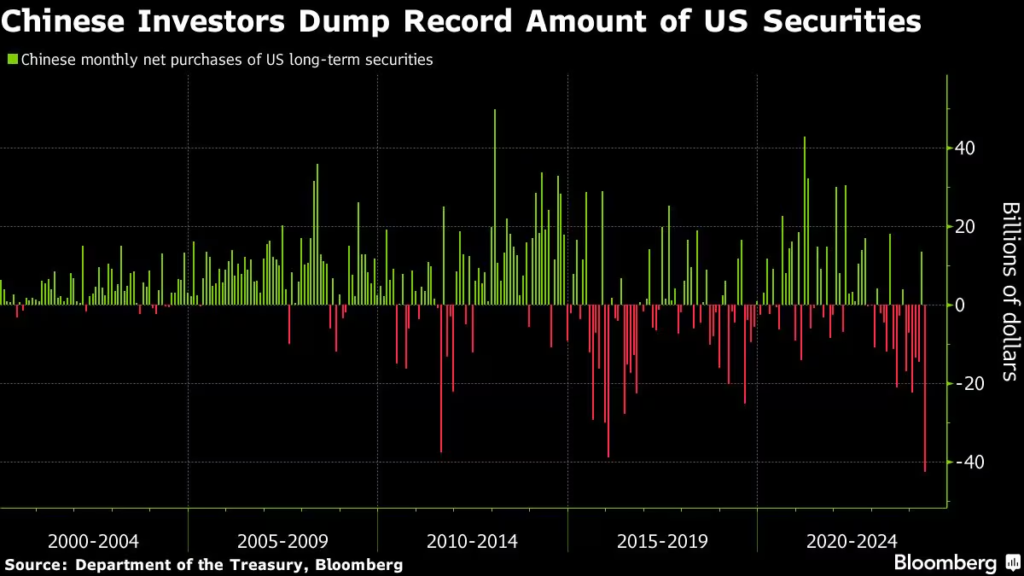
In the first three months of 2024 alone, China unloaded $53 billion worth of US Treasuries. In addition, China is increasingly abandoning the dollar in international trade.
For example, more than 90% of the $240 billion trade between Russia and China is done outside the dollar in yuan and ruble. At the same time, China and Russia have gone on record gold purchases to make their economies and financial systems more resilient to US sanctions.
China is the world’s largest producer and buyer of gold. Russia is number two. Most of this gold goes into the coffers of the governments of Russia and China. Russia has over 75 million ounces of gold, one of the largest amounts in the world. No one knows the exact amount of China’s gold, but most observers believe it is even larger than Russia’s stockpile.
Even if we take China’s official gold statistics – which almost certainly understate reality – Beijing’s gold reserves have risen 17% over the past 17 months to about 73 million ounces. China’s recent gold buying rally coincides – and not coincidentally – with the US seizing of Russian assets in the wake of the Ukraine conflict and a sell-off in US bonds.
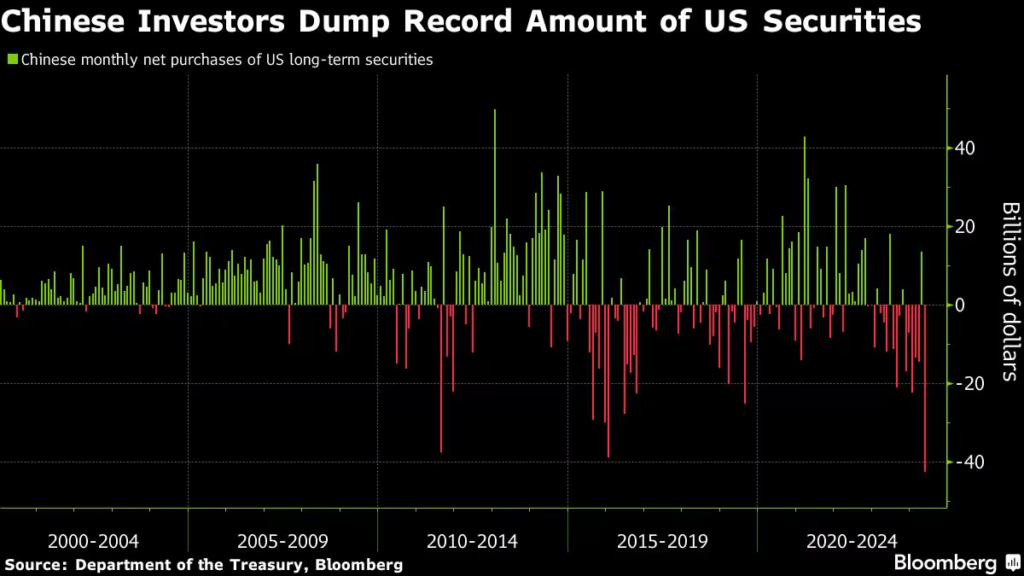
In the first three months of 2024 alone, China unloaded $53 billion worth of US Treasuries. In addition, China is increasingly abandoning the dollar in international trade. For example, more than 90% of the $240 billion trade between Russia and China is done outside the dollar in yuan and ruble.
At the same time, China and Russia have gone on record gold purchases to make their economies and financial systems more resilient to US sanctions. China is the world’s largest producer and buyer of gold. Russia is number two.
Most of this gold goes into the coffers of the governments of Russia and China. Russia has over 75 million ounces of gold, one of the largest amounts in the world. No one knows the exact amount of China’s gold, but most observers believe it is even larger than Russia’s stockpile.
Even if we take China’s official gold statistics – which almost certainly understate reality – Beijing’s gold reserves have risen 17% over the past 17 months to about 73 million ounces.
China’s recent gold buying rally coincides – and not coincidentally – with the US seizing of Russian assets in the wake of the Ukraine conflict and a sell-off in US bonds.
The end of an era
Bonds have been the bedrock of the international financial system since President Nixon abolished the dollar’s peg to gold in 1971. However, the US government’s seizure of Russian state assets was a fundamental change in that system, signaling the end of an era.
The fiat dollar can be either a neutral reserve asset or a political tool used by Washington. It can’t be both. After 2022, Russia, China and everyone else saw that the US dollar-centric international financial system was over. This is terrible news for the US dollar, which was already in big trouble as it becomes clear that the Fed is caught in a cycle of increasing currency devaluation.
The big picture and the paradigm shift
We are on the verge of a paradigm shift as gold replaces bonds as the primary asset class – the foundation of the international financial system. The last time the international monetary system experienced a paradigm shift of this magnitude was in 1971.
Gold then soared from $35 an ounce to $850 in 1980 – an increase of over 2,300% or more than 24 times. I expect the percentage increase in the price of gold to be at least as significant as it was during the last paradigm shift.
This is because the wave is being driven by the consolidation of a strong trend: the re-emergence of gold as the primary reserve asset. It could lead to an all-time high in the gold market. Although this great trend is already underway, I believe the turning point is yet to come.
