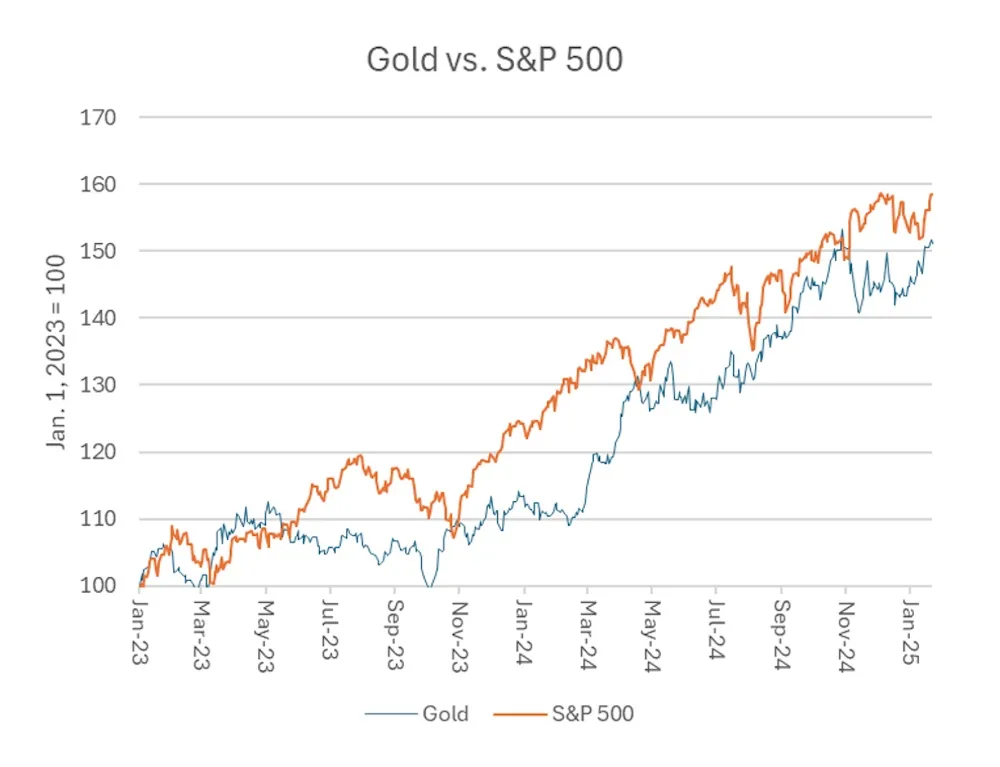
Investors have been betting heavily on an artificial intelligence (AI)-driven future over the past two years, as technology stocks have led the S&P 500 index up 60%. As of January 24, 2025, the cumulative market capitalization of Nvidia (NVDA) and other major AI infrastructure companies was nearly $16 trillion. 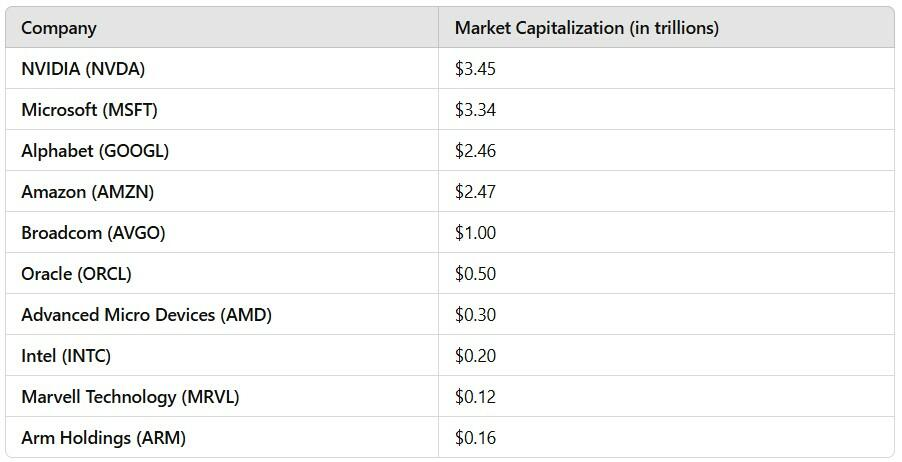
But there has also been a lot of speculation in the so-called “barbaric relic” of a monetary era that preceded the hegemony of the dollar, pushing the price of gold to historic highs.
In particular, gold has outperformed alternative hedging against the dollar by a huge margin.
Why would anyone take protectionist measures amid explosive tech-driven optimism?
The answer is that a lot could go wrong — lead to disaster, in fact.
Technology stocks are now the primary asset in the dollar-based global monetary system. Wall Street is in full swing while the economy falters – The Great Paradox!
The United States has sold $24 trillion more in assets to foreigners than foreigners have sold to Americans.
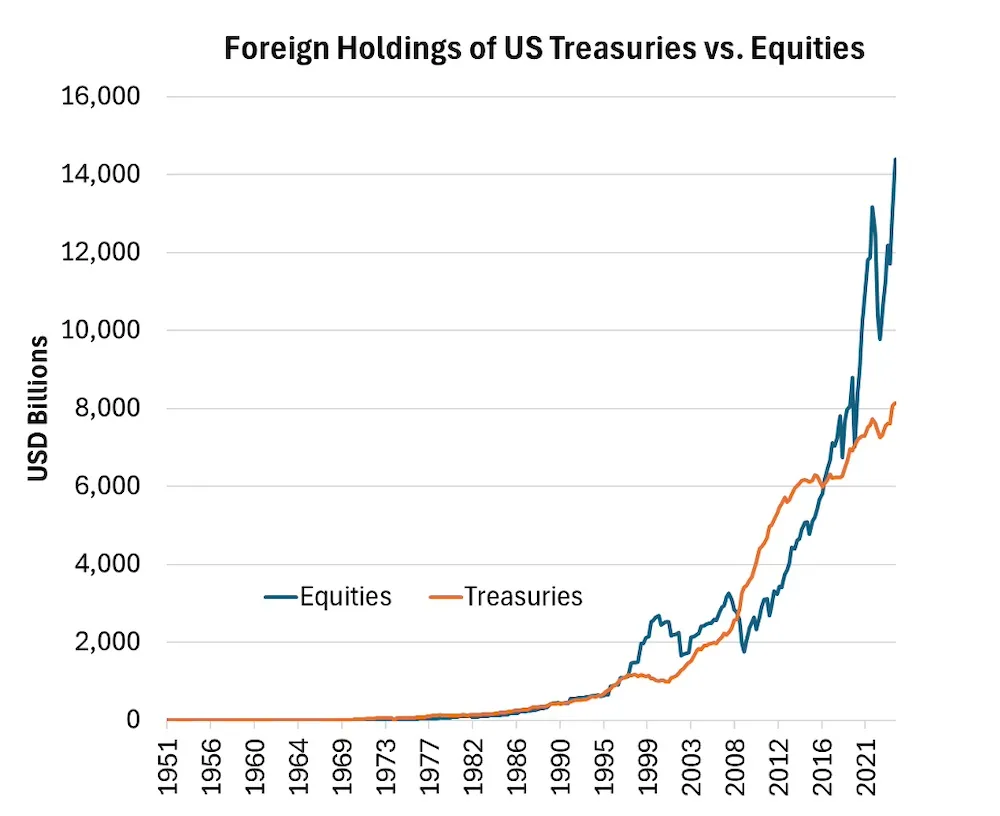
 This “net international position deficit” of $24 trillion, up from $18 trillion at the end of Donald Trump’s first term, has offset America’s cumulative trade deficit over the past 30 years. For the past 10 years, foreigners have been buying stocks instead of U.S. Treasury bonds, as they did in the past. Foreign central banks hold less U.S. government debt now than they did five years ago. If the tech boom turns out to be a bubble, it will drag the dollar down with it. The race for market share in artificial intelligence could dictate the fate of the U.S. currency. If, for example, DeepSeek, China’s open-source technology outperforms ChatGPT and other American large language models (LLMs), tech stocks could send the dollar and the American economy into a tailspin.
  There are many ways to hedge against the dollar. Few of them are attractive. A 6% to 7% U.S. budget deficit without war or recession, as incoming Treasury Secretary Scott Bessent told Congress last week, is unprecedented in history. But the dollar’s status as a reserve currency means America will be the first to suffer the consequences. Buying Treasury bonds linked to inflation (TIPS) — in part because of expectations of a higher U.S. deficit under Trump — has pushed the dollar higher against all major currencies. If U.S. inflation rises, so will interest rates, and the dollar’s exchange rate will rise against other currencies, even as the dollar loses value.
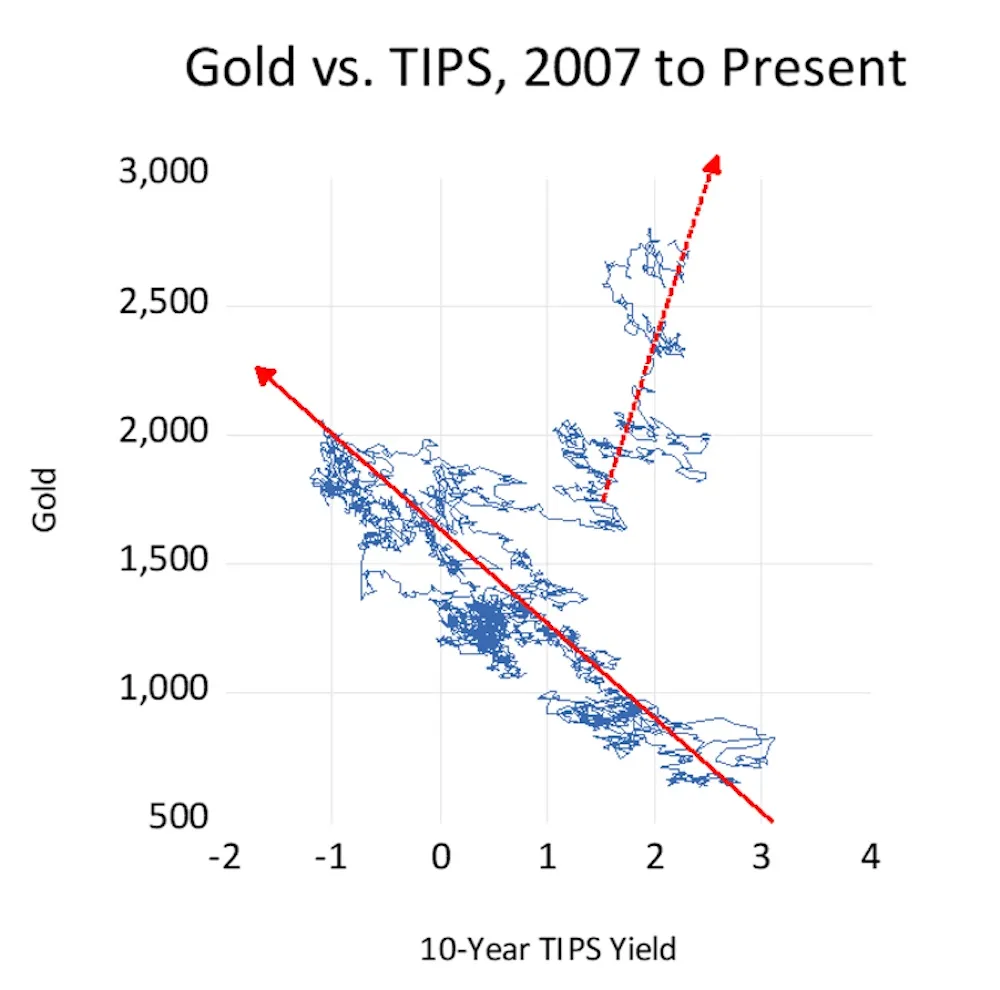
 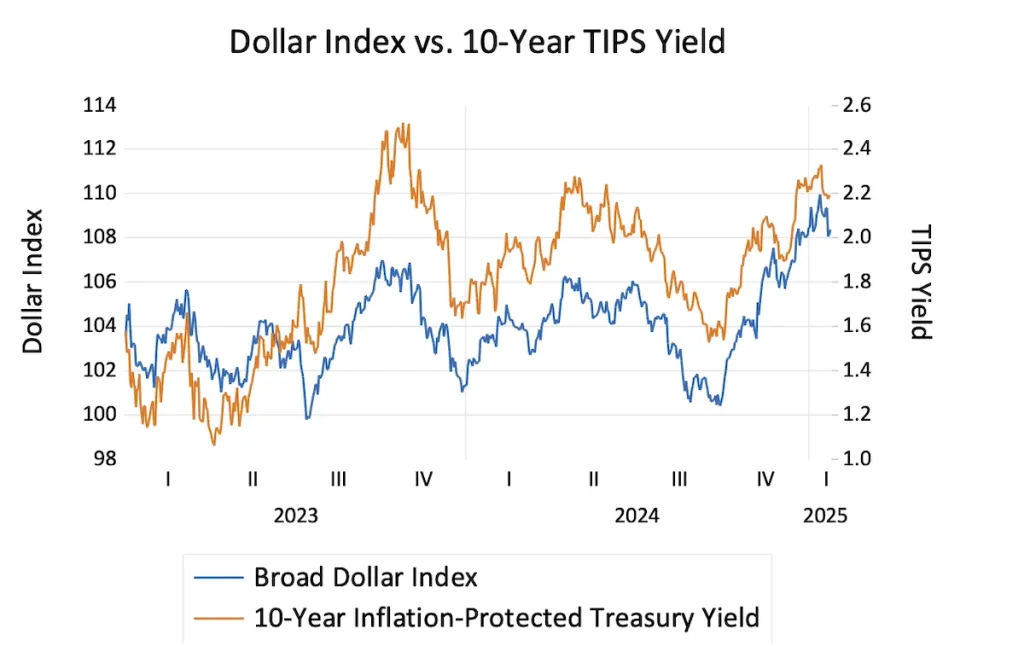 However, even as all currencies plunged against the dollar in response to rising “real” bond yields (based on inflation), gold rose, breaking a pattern that prevailed from 2007 to 2022.