The economics of “transit fees”
Initially, the fee is paid directly by the owners of the ships and oil cargoes. During the ceasefire, about 2,000 ships were stranded in the Persian Gulf, although not all of them were oil tankers. For these cargoes, the cost is an immediate loss. But once the fee is imposed, it becomes a measurable cost. Can companies pass it on? According to the Austrian school, “no tax can be passed on.” That is, the seller cannot simply raise the price so that the consumer pays it, because prices are determined by supply and demand. In the short term, the companies that pay the fee bear the full cost, as they have few alternative uses for the oil already loaded on tankers.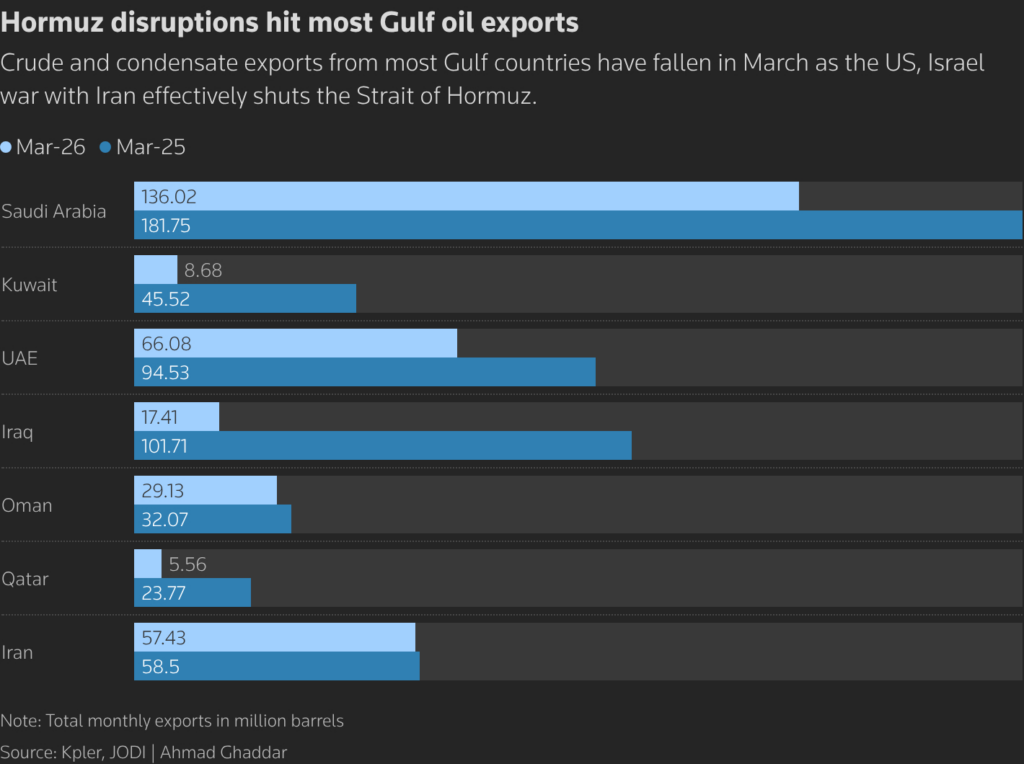
In the long run: who bears the burden?
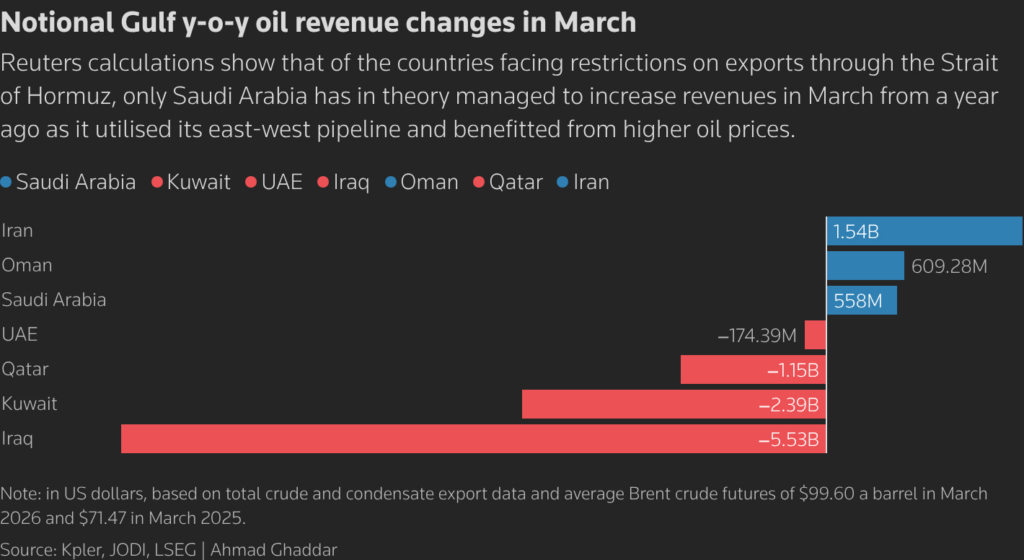
Over time, however, the cost is passed on to the oil producers. The price of oil at the source (in the field) will be lower by the amount of the fee compared to the world price. Thus, the value of the oil wells decreases. The cost ultimately falls on their owners — mainly state-owned companies such as:- Saudi Aramco (Saudi Arabia)
- Kuwait Oil Company (Kuwait)
- Abu Dhabi National Oil Company (United Arab Emirates)
A “Tolerable” Fee – Production Costs and Price
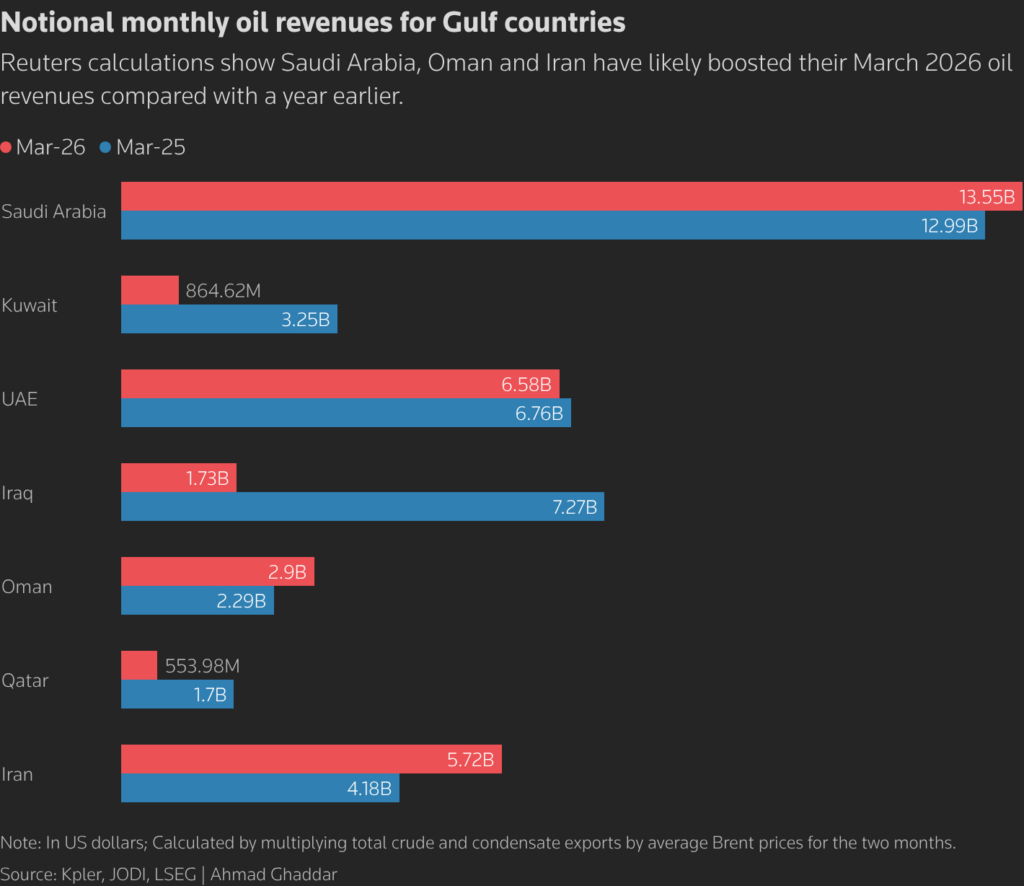
Paradoxically, the fee itself is not expected to disrupt the global oil market. For prices to rise, supply must be reduced. This will only happen if the fee makes production unsustainable. However, Gulf oil has low production costs:- Around $9.9/barrel in Saudi Arabia
- $12.3 in the United Arab Emirates
- $8.5 in Kuwait
Political and Monetary Impact
Iran also scored a major strategic victory:- It doesn’t directly hurt allies like China
- It doesn’t significantly disrupt the global economy
- It forces its Gulf rivals to pay it a portion of their revenues
The Smart Economic Tactics
The fee itself isn’t the cause of the oil market disruptions. The real damage comes from the destruction of infrastructure and production capacity due to war. The fee simply redistributes the revenues: the Gulf states are paying the price for their geopolitical position and alliances. If the Strait of Hormuz remains open and the toll continues, Iran will gain significant revenue for its reconstruction — without drastically disrupting the global oil market.Please follow and like us:
