The Blue Economy, i.e. all economic activities related to the sea and water resources, is a key pillar of sustainable development, with significant impacts on both the environment and society. At the same time, public health is directly and indirectly affected by the state of marine ecosystems, the activities that take place in them and the policies implemented to exploit and protect them.
The relationship between the Blue Economy and public health is two-way: on the one hand, a healthy sea offers clean air, safe food (such as fish and seafood), opportunities for physical exercise and mental well-being, promoting the overall health of citizens. On the other hand, unsustainable practices in shipping, fishing, industry and tourism can lead to pollution, degradation of ecosystems and the emergence of new risks to public health, such as microplastics, heavy metals or even waterborne diseases.
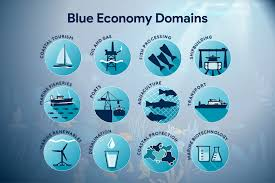
Therefore, strengthening the blue economy in ways that promote sustainability and maintain ecological balance is crucial for protecting and promoting public health. Understanding this interaction is essential for designing policies that balance economic growth with health security and environmental protection.
Analysis of the Blue Economy and Public Health Connections
The Blue Economy is not only a pillar of economic growth and environmental sustainability; it is also a fundamental strategic axis for public health: from nutritional adequacy and disease prevention, to innovation in pharmacology, mental well-being and resilience to climate or health crises.
Nutrition and prevention of chronic diseases
The Mediterranean diet is largely based on seafood. The blue economy, through sustainable fishing and aquaculture, ensures:
- High nutritional value: Fish and seafood rich in omega-3 fatty acids, vitamin D, iodine, selenium and vitamin B12.
- Reduction of cardiovascular risk: Studies (e.g. PREDIMED) show a >30% reduction in heart attacks in populations with regular seafood consumption.
- Antibiotic-free marine farming systems (e.g. integrated multimodal agriculture – IMTA) ensure healthy products.
Marine biotechnology and pharmaceutical innovation
Marine biodiversity is an unexplored pharmacological reserve:
- Macroalgae (algae): Source of phycocyanins with antiviral activity – in tests for HPV and respiratory viruses.
- Marine microorganisms: Produce new antibiotics (e.g. Salinosporamide A from Salinispora tropica – anticancer candidate).
- Collaboration with research institutions and pharmaceutical companies can create spin-offs for “marine-derived therapeutics”.
Mental Health and the Marine Environment
Studies from the UK, Canada and Sweden show:
- People who live near water have better levels of mental health (less depression, anxiety).
- The blue environment offers gentle exercise, rehabilitation and social integration.
- The “Blue Gym” program (UK) implements recreational and hydrotherapy programs for people with mild mental illnesses.
Climate Resilience and Health Security
Public health is indirectly affected by the health of marine ecosystems:
- Biodiversity crises increase the risk of zoonotic disease transmission (e.g. through population changes in marine mammals).
- Coasts provide natural protection from floods and heat waves, with a beneficial effect on the elderly and vulnerable groups.
- Marine microplastic pollution is associated with endocrine disruption and gastrointestinal problems
The concept of Blue Health, as developed in European programs and policies, concerns the systematic utilization of natural marine and coastal ecosystems to prevent diseases, enhance mental and physical health and reduce inequalities in access to a healthy environment, and it is essential to integrate the resilience of marine ecosystems into all environmental health risk assessments, in accordance with the One Health principle.
Estimated Economic Impact: Utilizing the Coastline and the Blue Bioeconomy
Greece, for example, based on EU and OECD data, utilizes less than 20% of its potential in the field of sustainable Blue Economy. The global Blue Economy market exceeds 2.3 trillion dollars (OECD, 2020), with a growth trend of more than 5% per year. Greece can develop a new sector of sustainable “health through nature” with a focus on island and coastal communities, transforming natural and cultural specificities into comparative advantages.
Reverse dynamics: Blue Health as an accelerator for resilient local economies
Integrating health into the Blue Economy leads to multiplier benefits:
- High-quality health and wellness tourism.
- Development of innovative markets for bioactive ingredients (marine pharmacology, functional foods).
- Upgrading primary health care infrastructure in coastal areas by integrating natural approaches.
- Cultivating environmental education through experiential experience in nature.
Blue Health is not just a supporting sector, but a strategic pillar of development and social cohesion.
Policy Proposal – Framework for Action
- National Network of “Blue Health Nodes” in selected Regions (e.g. South Aegean, Ionian Islands, Thrace), in collaboration with the Ministries of Health, Environment, Education and Tourism.
- Prevention and rehabilitation programs through marine activities (health trails, marine physiotherapy, guided swimming, outdoor yoga).
- Establishment of a Blue Health and Climate Resilience Observatory, with data collection on the impact of nature on health.
- Pilot integration of “nature prescriptions” in Primary Health Care (green-blue prescriptions), with guidance from health professionals.
- Lifelong learning programs for medical and paramedical staff, environmentalists, social workers and educators.
Financial Tools and Resources
- Horizon Europe – Missions: Cancer (psychosomatic rehabilitation) & Oceans (ecological innovations)
- LIFE Programme – Environment & Climate Adaptation: Natural solutions and population health
- Interreg Euro-MED / Greece-Cyprus: Creation of Blue Health clusters
- NSRF 2021–2027 – Health, Environment, Tourism: Financing of infrastructure, training, technology applications
- National Resilience & Recovery Plan – “Greece 2.0”: Innovative pilot projects in vulnerable areas
Strengthening Existing Public Health Systems
- Integrating Blue Health into National Prevention Strategies (Ministry of Health – National Public Health Plan).
- Networking of Health CSCs with Local Authorities and schools, for the implementation of “Sea & Health” programs.
- Development of interoperable digital tools for the monitoring of environmental and health indicators in coastal areas.
