China is actively promoting its plan for de-dollarization, promoting the yuan as the dominant currency in world trade, effectively challenging the long-standing dominance of the US dollar.
China is trying to promote the yuan as a medium of international trade, implementing the basic principle of de-dollarization – reducing dependence on the dollar. China once relied heavily on the dollar for trade.
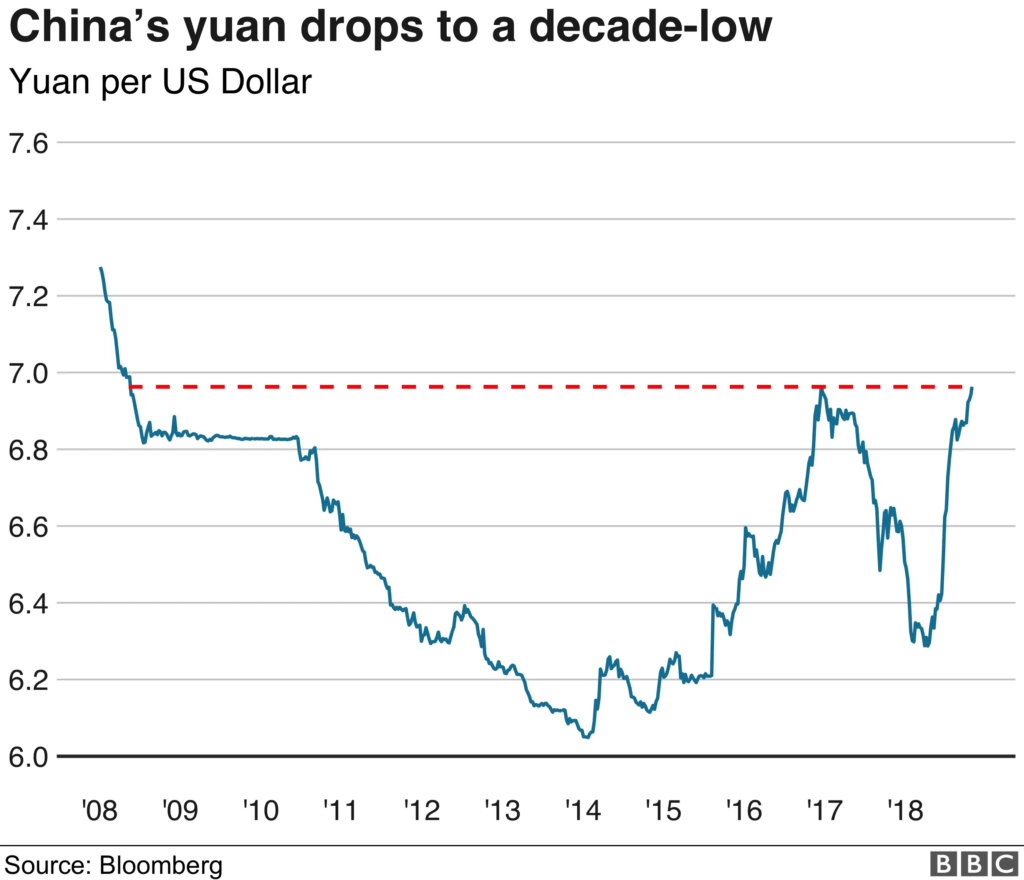
In 2010, 83% of Chinese trade was done in US dollars, while today it seems to be turning more towards the East and using local currencies. At the same time, on Friday, May 24, 2024, the People’s Bank of China allowed the exchange rate to weaken to levels not seen since January.
Timing is important for three reasons:
- The move comes as the Japanese yen continues to weaken,
- China’s deflation deepens and
- the US presidential election is approaching.
It is not difficult to connect the dots between these three dynamics, which could over the next 165 days or so affect geopolitical data. That’s when Americans head to the polls and decide whether to re-elect Joe Biden or give Donald Trump a second presidency.
If China is to let the yuan weaken to boost exports, Xi Jinping’s economy will be high on the US election agenda ahead of November 5. Nothing would trouble Biden’s Democrats and Trump’s Republicans more quickly than China’s devaluation of the yuan.
Since the 1980s as a New York businessman, Trump has been obsessed with the idea that Asians are stealing jobs. In the 1980s, it was Japan that had “systematically sucked the blood out of America.” Today, Xi’s economy is the “bad wolf” for the problems of the US economy.
Not that Biden is doing well with China. Case in point: the 100% tariffs Biden just slapped on Chinese electric vehicles.
But Trump’s plan for 60% across-the-board taxes on mainland goods would exponentially raise the stakes for Asia’s 2025 – and beyond. A weaker yuan may prompt Trump to go even further on tariffs on China.
Or even trying to beat China at its own game by weakening the dollar. If you think that sounds like a lot, maybe you haven’t been paying much attention to Trump’s 2017-2021 presidency.
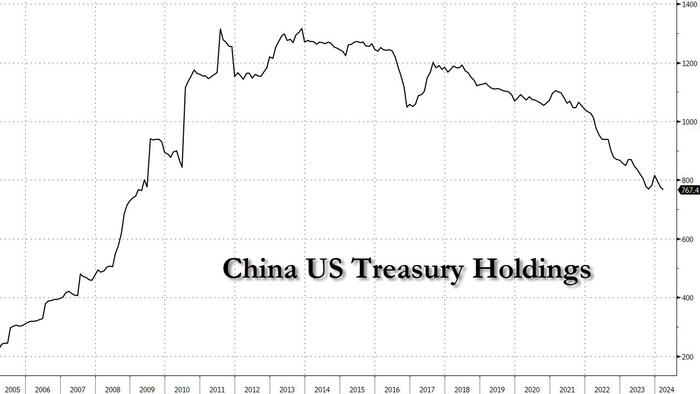
His team not only considered weakening the dollar and firing Federal Reserve Chairman Jerome Powell, but also reportedly considered canceling some of the debt held by Beijing. Since 2016, Trump has hinted here and there that he might make the US worthless.
A weaker yuan would put intractable problems in the Biden White House as well. Treasury Secretary Janet Yellen will almost certainly add China to the list of currency manipulators shortly. Therefore, fears that Xi may find it wise to push the yuan lower may be overblown.
Certainly, no monetary policy would boost China’s economy and stabilize consumer prices faster than a weaker exchange rate. But when you consider the costs — including triggering a bigger trade war with Washington — the ends may not justify the means.
1. Τhe yuan’s decline could exacerbate default risks among China’s property developers, many of which carry significant debt outside the country. The last thing policymakers want is another Evergrande Group-like disaster on their hands.
2. Ιt may waste eight years of progress in yuan internationalization. Since 2016, a major priority of Xi has been to increase the currency’s use in global trade and finance.
That year, China won for the yuan a coveted spot in the International Monetary Fund’s “special drawing rights” basket. The inclusion of the dollar, yen, euro and pound put the yuan on a path to reserve currency status.
Since then, the use of the yuan in international payments has steadily increased. Its share of transactions involving global financial messaging service Swift was 4.7% in March. The yuan is now the fourth most traded currency.
Also, efforts to dislodge the dollar as the cornerstone of world trade are proceeding apace. The gambit has many devotees, from Brazil, Russia, India, China and South Africa, the BRICS, along with Saudi Arabia and the United Arab Emirates. A devaluation of the yuan could stall efforts to de-dollarize.
However, the PBOC’s maneuvering this week prompted speculation of a possible change in Beijing’s approach to ending deflation. Its move on Thursday to cut the yuan’s peg to 7.1098 per dollar, the weakest since Jan. 23, is indeed garnering a lot of attention.
The challenge for the PBOC is to find the balance between a growth-friendly currency level without leading to capital outflows. As difficult as that balance may be to find, Xi may find the risk worth taking.
Xi’s Communist Party wants to end talk of China’s transition to Japanese-style stagflation. Here, a more favorable exchange rate could be just the thing. And considering the yen is down 11% so far this year.
Beijing may decide it has some geopolitical cover to soften the yuan. How far could the Biden team go to criticize China when staunch US ally Japan pursues its own policies that highlight its economic weakness.
Only time will tell how this will all play out. However, as the chances of China entering a devaluation race increase, so do financial and political risks around the world.
The general developments
By 2033, China will conduct 48% of its trade in renminbi, surpassing the use of the US dollar for the first time. This marks a significant shift in the overall balance of monetary policy and dollar dominance since the 1944 Bretton Woods agreement that created what has been called the dollar’s “excessive monetary privilege.”
The yuan, increasingly seen as a viable alternative to the dollar, has gained popularity as investors swap assets in yuan, boosting its global acceptance. The growth of foreign trade in yuan securities was a critical factor.
In 2021, cross-border payments in yuan related to investments in stocks and bonds reached 21 trillion yuan ($2.9 trillion), while total cross-border payments recorded in the current account, including trade in goods and services, amounted to 7.9 trillion yuan. This shift calls the dominance of the dollar into question.
The growing acceptance of the yuan, particularly supported by the BRICS alliance, threatens the global position of the US dollar. In addition, the rising US debt, close to $35 trillion, is intensifying plans for de-dollarization.
The expansion in international trade
Decades ago, the dominance of the US dollar was undisputed. Today, the rise of multipolar currencies allows other nations to compete. While a complete collapse of the dollar is unlikely based on today’s data, its global influence could be significantly reduced.
China’s ambitions for the yuan, supported by its alliance with the BRICS, indicate a possible shift in the international monetary landscape. If these trends continue, the US dollar’s position as the world’s leading trading currency could be seriously challenged. The US dollar is taking another hit as BRICS bilateral trade in local currencies has hit a record high.
Economic exchanges between two of the bloc’s best-known countries exceeded $50 billion for the first time. Record-breaking bilateral trade between Russia and India reached $17.5 billion in the first quarter of this year.
Trade between them in their local currency also rose by more than 5%, affecting the US dollar’s place in the global economy. Russia exported more than $16 billion worth of goods to India in the first quarter, while India’s exports topped $1 billion, a 22 percent increase compared to last year.
Additionally, the BRICS countries are currently developing their own currency, which will help fast-track many of their de-dollarization initiatives. We are at the start of an all-out currency war, the outcome of which will determine the conditions of global economic hegemony.
