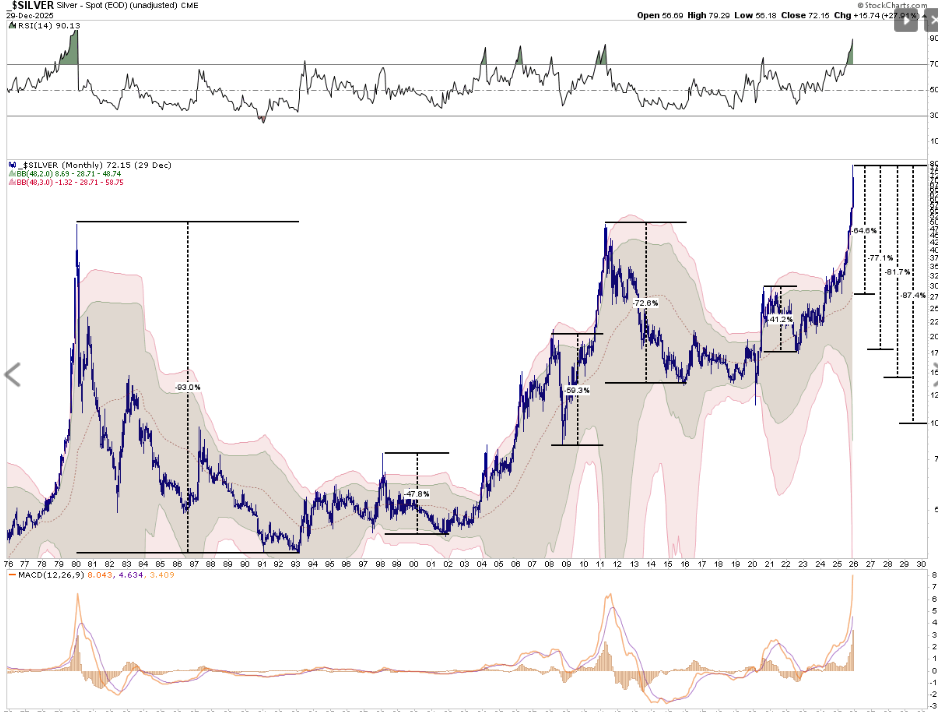
In 2025, precious metals prices rose sharply, with silver recently surging above $80 an ounce. Such price movements signal much more than a simple market rally. They argue that we are in the early stages of a fiat currency collapse and a systemic crash.
The hypothesis is that the sharp rises in precious metals reflect a mass flight from fiat currencies to “real money.” This behavior portends futures defaults, a collapse in confidence in stock markets, and ultimately a repricing of metals to extreme valuations, such as $200 for silver and $10,000 for gold.
However, the data behind these predictions do not support the narrative—only part of it. For example, the World Gold Council reported in Q2 2025 that “total gold demand reached 1,249 tonnes, up 7% year-on-year,” while mining production increased only marginally.
It’s a supply problem
Silver has also seen stronger industrial and investment demand, such as in EVs and solar panels, but according to Parkview Group, “demand in green energy applications, not retail inventory, remains the primary driver of prices.” The key point here is that these moves are significant, but they are not unprecedented — at least not yet.
What drives commodity pricing?
They are a function of supply and demand in commodity markets. Explosive price increases, however, are a different matter.
The pricing of all commodities — and precious metals in particular — is ultimately determined in derivatives markets.
These operate primarily through COMEX and CME. In the long run, physical demand does drive prices.
In the short term, however, prices are determined by futures contracts, where buyers and sellers speculate, hedge, or arbitrage.
Since the vast majority of these contracts are settled in cash—without physical delivery—price is influenced more by the volume and position of financial participants than by direct physical shortages.
This structure allows large institutions, hedge funds, and algorithmic traders to influence the direction of prices through leverage, often independently of actual physical flows. Of course, two key factors drive speculators into the precious metals markets.
1. The first is the narrative itself.
When prices rise, it often coincides with periods of uncertainty — such as when the Federal Reserve signals interest rate cuts, when real yields fall, or when geopolitical tensions rise.
The self-fulfilling prophecy
None of these conditions imply a systemic collapse, but the narrative attracts institutional investors.
2.The second factor is price momentum.
As prices rise, the narrative strengthens and traders “chasing” the rise, creating a self-reinforcing cycle that continues until it is broken. Such phenomena have been observed repeatedly in the history of silver, and each time it was followed by a sharp correction.
Another issue is the actual supply and demand. Silver, for example, plays a critical role in industrial production — electronics, photovoltaics, automotive. When prices rise sharply, costs for manufacturers increase, which is passed on to consumers and ultimately limits demand.
This reduces the industrial need for silver, while at the same time high prices encourage increased production from mines.
In other words: “The cure for high prices is high prices.”
3.Finally, the markets themselves impose limits.
When prices spike, COMEX and CME raise margin requirements to reduce systemic risk. Despite claims of “manipulation,” this is a key stability mechanism.
Since early December, the CME has raised margin more than once, as it did in 2011 before the mean reversion.
Margin is the collateral (deposit/capital) that an investor must put up to open or maintain a position in futures or other derivatives. It is not the cost of the market, but rather a buffer against potential losses.
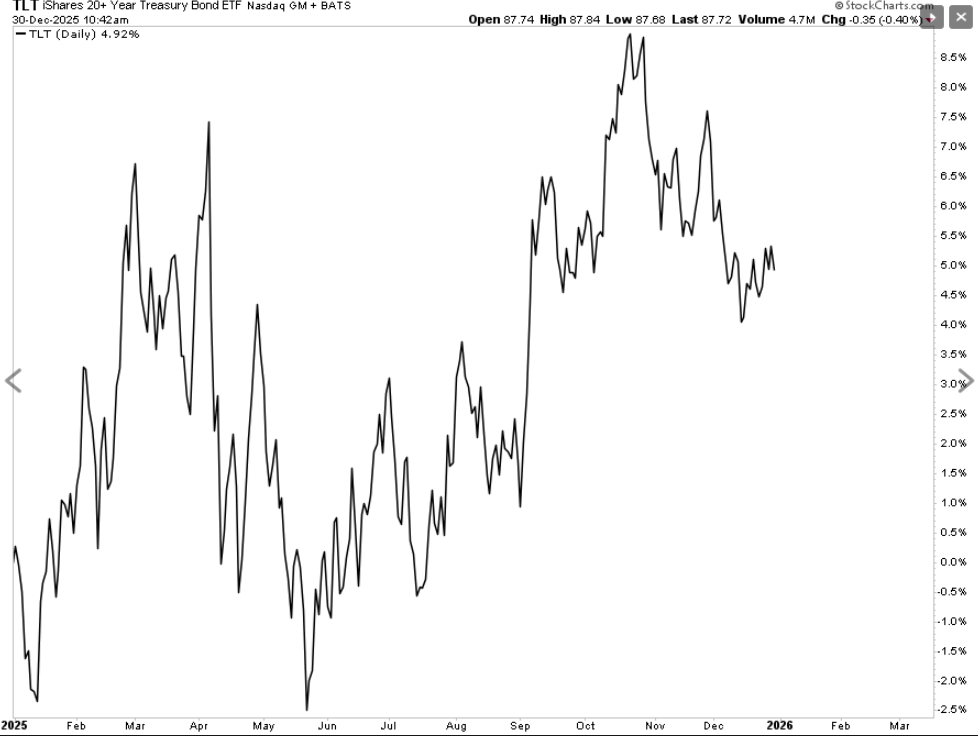
As for the claims of a fiat currency collapse, there is no evidence to support them. If that were to happen, US bond yields would skyrocket, rather than post a positive total return in 2025 – the latest developments certainly do not bode well for positive developments….
Inflation and inflation expectations also do not indicate a collapse in confidence in the dollar.
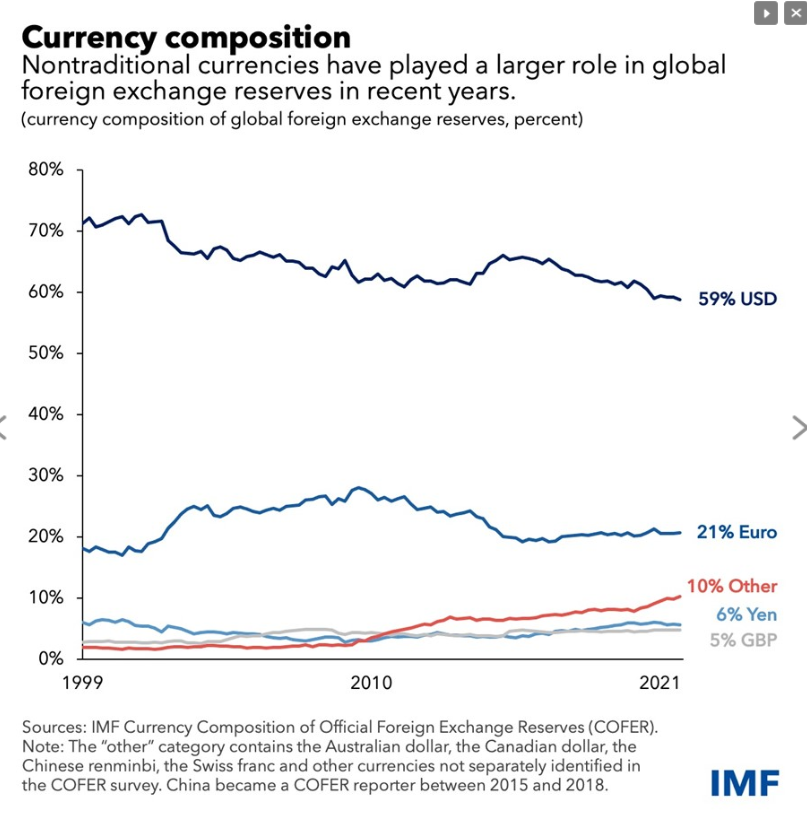
The reality is that the dollar remains the world’s reserve currency, while the euro and yen are functioning normally – for now
Extreme predictions of $200 silver and $10,000 gold are not based on supply and demand fundamentals and would require a monetary event of unprecedented magnitude – for which there are only indications today. We cannot bet that it is impossible…